
Quick answer: Most cats need three core shots: FVRCP, rabies, and FeLV for kittens under one year old. Kittens start FVRCP at 6–8 weeks, get boosters every 3–4 weeks until about 16 weeks, and get a single rabies shot at 12–16 weeks. After boosters at about one year, most adult cats need FVRCP every three years and rabies every one to three years, depending on the vaccine and local law.
This guide is for new kitten owners and anyone who adopted an adult cat with no vaccine records. It lays out the full schedule by age, explains what each shot protects against, and gives real US cost ranges for planning the visits.
Photo: At the Vet’s 5 by Anne Worner, CC BY-SA 2.0, via Openverse.
Which vaccines does my cat actually need?
Cat vaccines fall into two groups: core vaccines, which every cat should get, and non-core vaccines, which depend on your cat’s lifestyle. The 2020 AAHA/AAFP Feline Vaccination Guidelines list five core vaccines for pet cats — the three in the FVRCP combination, rabies, and FeLV for cats under one year old.
FVRCP is one combination shot against three viruses: feline viral rhinotracheitis (herpesvirus) and calicivirus, which cause upper respiratory infections, and panleukopenia (feline distemper), which is highly contagious and often fatal in kittens. The Cornell Feline Health Center notes that the feline practitioners’ advisory panel recommends these core vaccines even for indoor-only cats, because the viruses can travel in on shoes, hands, and clothing.
Rabies is a separate core vaccine and the only one usually required by law. It spreads through bites and infected saliva, and it is almost always fatal once symptoms appear. Timing and boosters follow your local law and the vaccine label.
FeLV, the feline leukemia virus, is core for kittens under one year old because young cats are the most vulnerable. It spreads through saliva, grooming, and shared bowls. For adult cats it becomes non-core, recommended only if your cat goes outdoors or lives with a cat of unknown FeLV status. Your vet tests for FeLV before the first dose.
Non-core vaccines depend on risk. Bordetella is for cats in crowded housing such as shelters and catteries. Chlamydia felis is for multi-cat homes where that infection has been confirmed. The FIV vaccine is no longer sold in North America.
What is the cat vaccination schedule by age?
Kittens need a series of shots, not a single visit. Antibodies from the mother’s milk can block a vaccine, so doses repeat every few weeks until that protection fades. The 2020 AAHA/AAFP guidelines set the timing below; your vet adjusts the exact dates to your kitten.
- 6–8 weeks: FVRCP, first dose. A kitten younger than 6 weeks does not get a useful response from the vaccine.
- 8–9 weeks: FeLV test, then first FeLV dose. Your vet tests for FeLV first: the vaccine is only for cats that test negative. The two FeLV doses come 3–4 weeks apart.
- 10–12 weeks: FVRCP, second dose. This dose comes 3–4 weeks after the first one.
- 12–16 weeks: FVRCP third dose, second FeLV dose, and rabies. Rabies is a single dose, given once the kitten is at least 12 weeks old, at the timing the vaccine label and local law set.
- 16–20 weeks: final FVRCP dose, if needed. The last kitten dose must land at or after 16 weeks to count; a kitten that started late may need fewer doses.
- About 6 months: FVRCP booster. The guidelines suggest this at 6 months rather than a full year, to close the gap if maternal antibodies blocked the last kitten dose.
- About 1 year: adult boosters for FVRCP and rabies, plus an FeLV booster 12 months after its kitten series for cats still at risk.
- Adult cats: FVRCP every 3 years and rabies every 1–3 years, per the vaccine label and local law. FeLV boosters continue yearly only for cats that still meet unknown or infected cats.
An adopted adult cat with no records is treated as unvaccinated and gets the full kitten series. A cat simply overdue for a booster just gets a booster, no matter how long the gap. Bringing a new kitten home is also the right time to sort out the rest of its first-year care: our guide to how to litter train a kitten covers the other half of those first weeks.
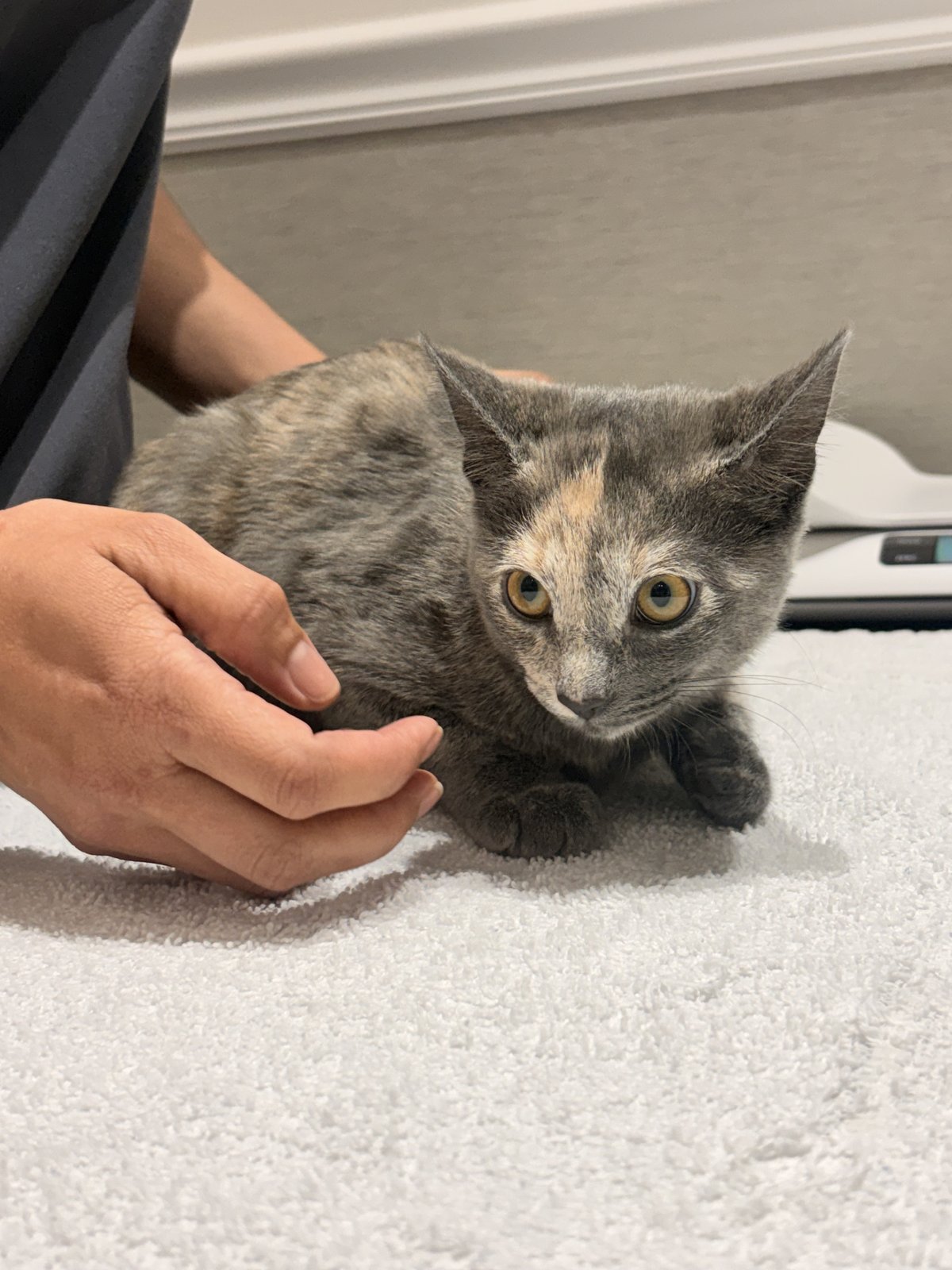
Photo: Kitten supported on a towel-covered examination table in Newark, New Jersey by Veterinarian Pet Alliance, CC BY 4.0, via Wikimedia Commons.
How much do cat vaccinations cost?
Prices vary by city and clinic. The ranges below are a planning guide for the United States as of November 2026, based on 2026 vet invoices collected by The Pet Advocate Vet clinic.
| Vaccine | Typical cost per dose |
|---|---|
| Rabies | $15–$30 |
| FVRCP | $20–$40 |
| FeLV | $25–$45 |
| Exam fee (per visit) | $40–$70 |
| Full kitten series (all visits) | $150–$350 |
A single adult booster visit, exam plus one or two shots, usually lands between $50 and $170. The exam fee applies at every visit, so the kitten series costs more than the shots alone, and a one-time FeLV/FIV blood test adds about $30–$60. These figures come from a 2026 cat vaccine cost guide built from real vet invoices, updated in August 2026.
If the full-service price is too much, look for low-cost vaccine clinics run by shelters, humane societies, and nonprofits. A single shot at a community clinic often runs about $15–$25. Before you go, call and ask which vaccines they offer, whether an exam fee applies, and what records to bring. Keep the vaccine card the clinic gives you and photograph it as a backup: boarding facilities, groomers, and your next vet will all ask for it.
What not to do with cat vaccinations
- Do not skip shots because your cat stays indoors. The viruses travel in on shoes and clothing, and an escaped indoor cat has no protection. Our guide to indoor vs outdoor cats explains where the risks differ and where they do not.
- Do not stop after the first dose. One FVRCP shot does not protect a kitten: the series works because the last dose lands after maternal antibodies fade, at or after 16 weeks.
- Do not skip the FeLV test. The FeLV vaccine is only for cats that test negative. Vaccinating an already infected cat does not help it.
- Do not guess the rabies rules. Timing and boosters follow your state and local law, not a national schedule, so ask your vet at the first visit.
- Do not vaccinate a sick or pregnant cat without asking your vet first. The guidelines advise against vaccinating pregnant queens, and a vet may delay shots until an ill cat recovers.
- Do not let a booster slide for years. An overdue cat is an unprotected cat, so put the next due date on your calendar before you leave the clinic.
When to call your vet
Most cats are a little sleepy or tender at the injection site for a day after a shot. Call your vet the same day if your cat vomits repeatedly, has diarrhea that does not stop, develops swelling around the face or muzzle, breaks out in hives, or seems very weak or unable to stand. These signs are rare, and vets want to hear about them right away.
Call immediately, day or night, if your cat has trouble breathing, collapses, or has a seizure after a vaccine. Bring the vaccine record so the clinic can see exactly which shot your cat received and when. If your cat swallowed something dangerous, our guide to pet urgent care walks through what counts as an emergency and what to do first.
FAQ
Do indoor cats need vaccinations?
Yes. The feline practitioners’ advisory panel recommends core vaccines even for indoor-only cats: the viruses can enter on shoes, hands, and clothing, and an indoor cat that slips outside has no protection. Rabies vaccination is also required by law in most places.
What happens if my cat misses a vaccine?
Call your vet and book the next dose as soon as you can. An overdue adult cat gets a booster, no matter how long the gap, and does not restart the whole series. A kitten that misses a dose gets the next dose on the vet’s revised dates, with the final dose still landing at or after 16 weeks.
How much does it cost to vaccinate a kitten?
Plan on about $150–$350 for the full kitten series across three or four visits as of November 2026, covering the FVRCP series, the two-dose FeLV series, the rabies shot, the FeLV test, and the exam fee at each visit. Low-cost clinics often charge about $15–$25 per shot.
How do I find low-cost cat vaccinations near me?
Search for vaccine clinics at your local animal shelter, humane society, or SPCA, and ask your vet about community vaccine events. Before you go, ask which vaccines are offered, whether an exam fee applies, and what records to bring.
We are not veterinarians. This article is general information; talk to your vet about your own pet.