
To clean a cat water fountain, unplug it, take it fully apart, and wash every part with warm water and mild dish soap. Soak mineral buildup in a 1:1 white vinegar and water solution for 15–30 minutes, scrub the pump with a small brush, rinse everything thoroughly, and reassemble with a fresh filter.
Photo: Pexels.
Why does a cat water fountain need regular cleaning?
A cat water fountain looks clean long after it stops being clean. Moving water feels fresh, but the reservoir, pump, and spout collect biofilm within days — a thin, slimy coating of bacteria and yeast fed by dust, food particles, and cat saliva. Once it takes hold, it can change the taste and smell of the water enough that a picky cat walks away.
Cats that drink less face a higher risk of urinary problems. The Cornell Feline Health Center notes that adequate water intake is an important part of managing feline lower urinary tract disease. A dirty fountain can work against the very reason most owners buy one.
The pump is the second reason cleaning matters. Hair, food crumbs, and mineral scale clog the small impeller inside the pump, forcing it to work harder until it runs hot, grows noisy, or stops altogether. Based on specs and owner feedback we compared, most fountain pumps last months only when cleaned regularly — and a neglected pump is the most common cause of a fountain dying early.
A clean fountain also removes one avoidable risk factor for chin irritation: stagnant water can harbor bacteria around a cat’s mouth, and some owners link dirty plastic fountains to feline acne. The connection is not proven in every case, and any sores or swelling should be checked by a vet.
What do you need to clean a cat water fountain?
You probably own everything already. Cleaning takes about 15 minutes — gather the supplies first so nothing sits in dirty water while you hunt for a brush.
- Mild dish soap — plain and unscented. No antibacterial soaps, bleach, ammonia, or strong fragrance — residue ends up in your cat’s drinking water.
- White vinegar — the descaler. A 1:1 mix with water dissolves chalky mineral scale on pumps and spouts, especially in hard-water homes.
- Baking soda (optional) — a baking soda and water paste gently scrubs stubborn stains on ceramic and stainless steel. Skip it on plastic, where it can scratch and trap bacteria.
- A small brush set — a bottle brush for the reservoir and spout, plus a narrow brush or old soft toothbrush for the pump housing. Pipe cleaners reach channels a brush cannot.
- A clean sponge or cloth — one reserved for the fountain.
- A replacement filter — check whether yours uses a charcoal filter, a foam pre-filter, or both, and keep a spare. As of November 2026, most brands sell filter packs of 4–8.
- A small bowl — for soaking the pump and small parts.
How do you clean a cat water fountain step by step?
The process is the same for almost every fountain.
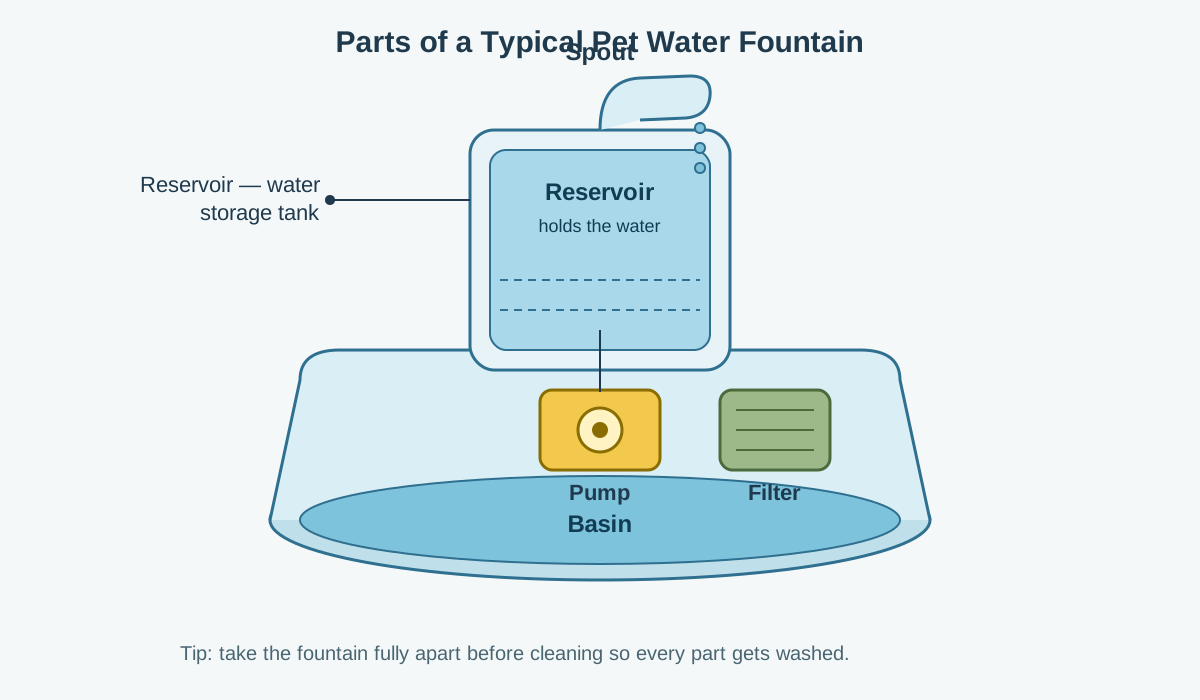
1. Unplug the fountain and empty it
Always unplug an electric fountain before touching the water. Pour out the water, remove the lid, spout, and filter housing, and set them on a towel. Take out a charcoal filter now — filters are replaced, not washed, and soaking one in vinegar ruins it.
2. Take the fountain fully apart
Most fountains come apart into five or six pieces: reservoir, pump, filter housing, spout, basin, and lid. Separate every piece — the parts you cannot see get dirtiest, so a quick wipe outside never replaces full disassembly. Keep small pieces in a bowl.
3. Wash every part with soap and water
Wash the reservoir, basin, spout, and lid with warm water and a few drops of mild dish soap. Pay attention to seams, corners, and the underside of the lid. Rinse under running water until it runs clear — a piece that still feels slippery needs another rinse.
4. Clean the pump separately
Most owners skip the pump — and it needs cleaning most. Open the housing — most snap or twist apart — and pull out the small impeller inside. Rinse both under running water, then use the narrow brush or a cotton swab to clear hair and debris from the intake slots. If the impeller feels gritty when you spin it, soak it in vinegar solution for 10 minutes and brush it again.
5. Descale with vinegar
If you see white, chalky buildup on the pump, spout, or reservoir — common in hard-water areas — soak those parts in a 1:1 mix of white vinegar and water for 15–30 minutes, then wipe the scale away. For heavy buildup, use undiluted vinegar for an hour. Never mix vinegar with bleach, and never use it on a filter.
6. Rinse everything thoroughly
Rinse every part under clean running water, including the pump housing and spout channels. The vinegar smell must be completely gone before reassembly — cats smell far better than we do, and even a faint trace can make a cat refuse the fountain for a day.
7. Dry, refilter, and reassemble
Let the parts air-dry on a towel, or dry them with a clean cloth. Put in a fresh filter if yours is due, reassemble in reverse order, and check the pump sits flat and the spout is seated. Fill with fresh water, plug in, and watch the flow — a steady, even stream means every part is back where it belongs.
How often should you clean each part of the fountain?
Not every part needs the same attention. The reservoir holds the most water, so it needs the most frequent care; the filter simply gets swapped on its own cycle. The table below follows manufacturer guidance and owner feedback we compared.
| Part | How often | What to do |
|---|---|---|
| Drinking water | Daily | Top up with fresh water; remove debris |
| Basin and spout | Every 1–2 days | Quick rinse and wipe to remove slime |
| Reservoir and lid | Weekly | Full wash with warm water and dish soap |
| Pump and impeller | Weekly | Disassemble, rinse, brush out hair and debris |
| Filter (charcoal and foam) | Every 2–4 weeks | Replace it; never wash and reuse a charcoal filter |
| Full descale | Monthly | Soak hard parts in 1:1 vinegar and water, 15–30 minutes |
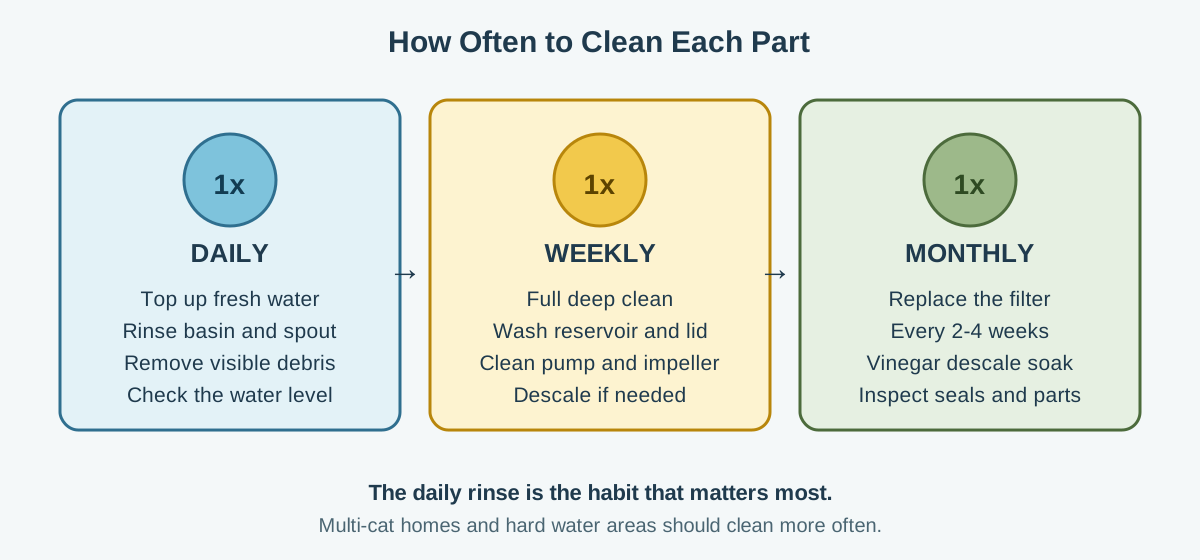
The daily rinse is the habit that matters most: a fountain wiped every day takes far less effort to deep-clean each week, because biofilm never gets a chance to establish itself.
Filters deserve a special note. A charcoal filter absorbs odors and some impurities, but once saturated it does nothing — and a filter left in place for months can itself become a home for bacteria. Mark the replacement date on a calendar; as of November 2026, most manufacturers recommend a new filter every 2–4 weeks.
Does the fountain material change how you clean it?
Yes — plastic, stainless steel, and ceramic fountains share the same schedule, but tolerate different cleaning methods. The material decides how aggressive you can be with scrubbing and descaling.
Plastic fountains are the most common and the cheapest, but also the hardest to keep clean. Plastic scratches easily, and each tiny scratch gives bacteria a place to hide from your sponge. Use only soft cloths and brushes, never abrasive pads, and replace a reservoir with deep scratches or a permanent cloudy film. Plastic also holds odors, so a weekly wash matters more, not less.
Stainless steel fountains are the easiest to clean and the most hygienic of the three. Steel resists scratches, does not hold odors, and tolerates a firmer scrub and a longer vinegar soak. It shows water spots more visibly than plastic, but scale wipes off easily. If your cat has had chin irritation linked to a plastic fountain, stainless steel is the material most vets and owners recommend — and the ASPCA’s general cat care guidance stresses keeping food and water bowls clean as part of everyday cat care.
Ceramic fountains sit in the middle: heavy, stable, and easy to wipe clean, with a glazed surface that resists bacteria better than plastic. The risk is chipping — a chipped glaze exposes porous ceramic underneath, which traps moisture and bacteria. Inspect the glaze each time you clean and retire any cracked or chipped piece. Ceramic is also the heaviest option, so lift with both hands.
What are the signs your cat’s fountain needs cleaning right now?
Your cat will usually tell you before the calendar does. Clean the fountain the same day any of these appear:
- Slimy surfaces. Run a finger along the basin or reservoir. If it feels slick, biofilm is already there, even if the water looks clear.
- A weak or uneven water flow. A pump choked with hair or scale cannot push water properly — the stream gets thin or sputters.
- A noisy pump. A clean pump hums quietly. Grinding or rattling usually means debris in the impeller or a pump running dry.
- Visible debris or cloudiness. Food crumbs, hair, or a milky haze mean the filter is spent and the water needs changing now.
- An odd smell. Fresh fountain water has almost no smell. A musty or sour odor means bacteria have had too long to grow.
- Your cat avoids the fountain. A cat that suddenly drinks from the tap or a puddle instead of the fountain is voting with its paws. If drinking habits change suddenly, or your cat seems lethargic or unwell, call your vet first — a change in thirst can be a symptom, not just a preference.
A fountain only helps if the cat actually uses it — some cats prefer a wide, still bowl. If your cat ignores every fountain you try, wet food can add meaningful moisture to their diet — but any sudden change in how much your cat drinks is worth a vet visit.
What mistakes should you avoid when cleaning a cat water fountain?
Using harsh cleaners. Bleach, antibacterial sprays, and scented detergents leave residues that can irritate a cat’s mouth and stomach. Mild dish soap and vinegar are all a fountain needs.
Forgetting the pump. Washing the visible parts and skipping the pump is the most common shortcut, and the most costly. A dirty pump fails first. Open the housing every week, every time.
Washing and reusing a charcoal filter. Charcoal filters are disposable by design — rinsing one does not restore it, and a reused filter can release trapped debris back into the water. Replace on schedule and keep a spare pack on hand.
Not rinsing enough. Soap and vinegar residue are invisible, and cats notice them before you do. After washing and descaling, rinse each part until it smells of nothing at all. A final rinse costs thirty seconds and prevents a day of a cat refusing to drink.
Letting the fountain run dry. A pump running without water overheats in minutes and can burn out permanently. Top up daily, and never plug a fountain in before it is filled.
Cleaning with the same sponge as the dishes. A kitchen sponge carries food grease and bacteria that belong nowhere near drinking water. Keep a dedicated sponge for the fountain.
The same hygiene habits apply to litter boxes — our guide to litter training a kitten covers keeping that corner clean.
Frequently asked questions
How often should I clean my cat’s water fountain?
Clean it weekly: a deep clean — full disassembly, wash, pump cleaning, and rinse — plus a daily top-up and wipe keeps biofilm and scale from building up. Multi-cat and hard-water homes should clean more often.
Can I use vinegar to clean a cat water fountain?
Yes, white vinegar is safe and effective for descaling. Soak hard parts in a 1:1 mix of vinegar and water for 15–30 minutes, then rinse until no smell remains. Never use it on the filter, and never mix it with bleach.
Can I put my cat water fountain in the dishwasher?
Only if the manufacturer says so. Even then, hand washing is gentler, lets you inspect each part for cracks and buildup, and high heat can warp plastic and degrade seals.
Why is my cat’s water fountain slimy?
The slime is biofilm, a layer of bacteria and yeast that forms on any wet surface within days. It builds up fastest in warm rooms and in fountains that are topped up but never cleaned. A weekly wash and pump cleaning removes it; a daily rinse slows its return.
How long do cat water fountain filters last?
Most charcoal filters last 2–4 weeks, and foam pre-filters last about the same. Replace them on schedule — a saturated filter stops filtering long before it looks dirty. As of November 2026, filter packs cost far less than a replacement pump.