
Most dogs lick their paws now and then as normal grooming, especially after a walk. Frequent, intense, or obsessive licking is different: it usually means something is itching, hurting, or stressing your dog. Allergies are the most common cause. If the licking is constant, focused on one paw, or leaves the skin red or sore, book a vet visit.
Is it normal for dogs to lick their paws?
Yes, occasional paw licking is normal. Dogs use their tongues the way we use a washcloth: to clean off mud, sand, or salt after a walk or a meal. A few licks after coming inside, then a nap, is ordinary grooming.
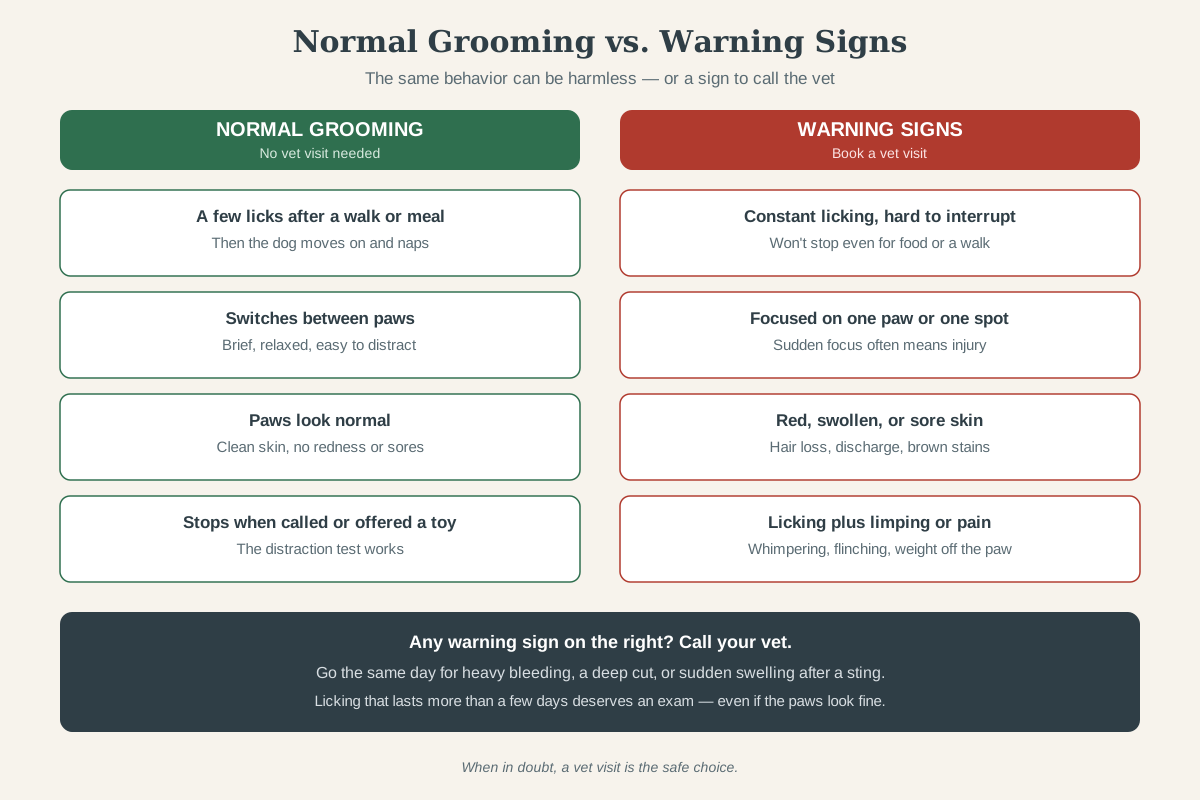
The line between normal and excessive is frequency, intensity, and focus. Normal licking is brief, switches between paws, and stops when your dog is distracted. Problem licking is long, repeated, hard to interrupt, and often aimed at the same spot between the toes.
Try the distraction test: call your dog or offer a toy. A dog that is simply grooming will stop and move on; a dog that returns to the same paw within seconds is telling you something is wrong.
Why does my dog lick his paws so much?
Dogs lick their paws for two broad reasons: something bothers the paw, or licking itself has become a coping habit. The first group is medical, the second is behavioral, and many dogs have a mix of both: an untreated itch can turn into a habit that continues after the original cause is gone.
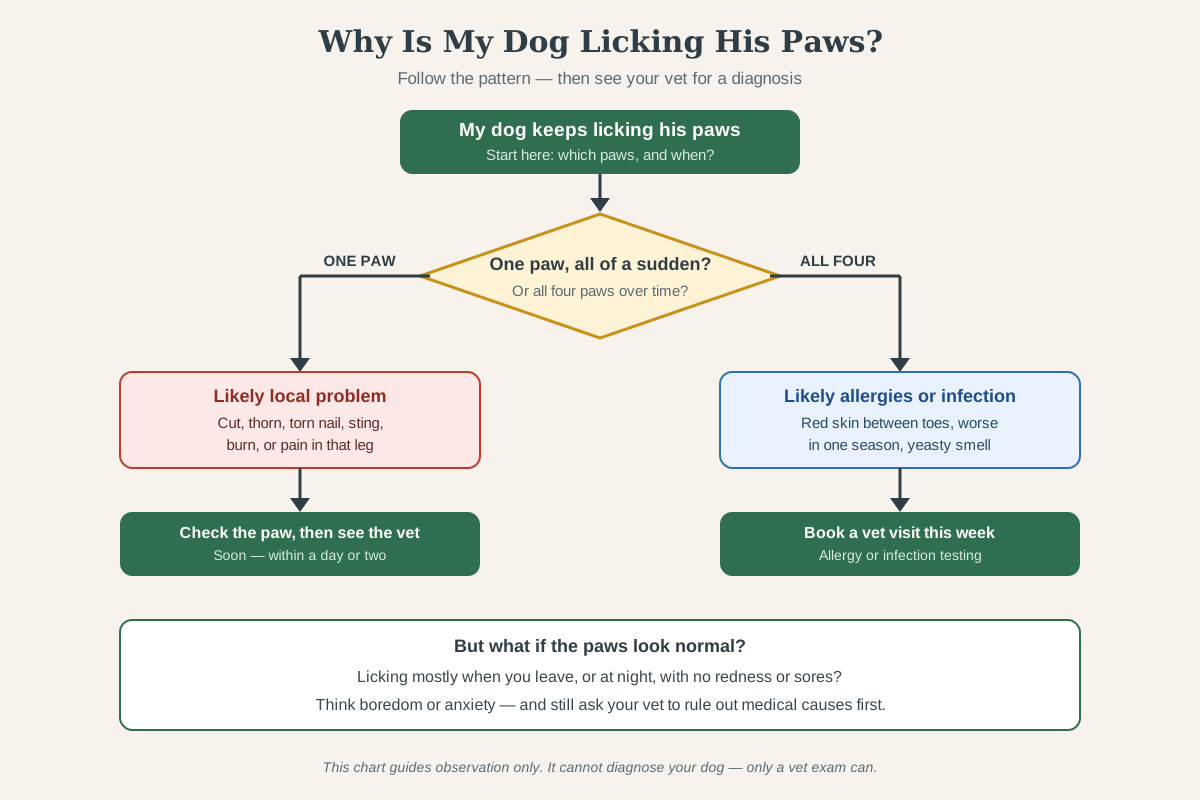
The pattern is your best clue: one paw, suddenly, usually means something local, like a cut, a thorn, or a bee sting. All four paws, especially with a seasonal pattern, points toward allergies. Licking mainly when you leave points toward separation anxiety.
| Possible cause | What you may notice | Sensible first step |
|---|---|---|
| Environmental allergies | All four paws, red skin between toes, worse in spring/fall | Note the pattern; book a vet visit |
| Food allergies | Itchy paws year-round, ear infections, soft stools | Ask your vet about an elimination diet trial |
| Skin infection | Red, swollen paws, yeasty smell, brown stains on light fur | See a vet promptly; prescription treatment needed |
| Injury or foreign object | Sudden one-paw licking, limping, visible cut or torn nail | Check the paw; see a vet if you find a wound |
| Parasites | Intense itching, black specks in fur, hair loss | Check flea prevention; ask your vet to rule out mites |
| Pain or arthritis | Licking one leg, stiffness after rest, won’t jump | Note the timing; book a vet exam |
| Boredom or anxiety | Licking when left alone or at night; paws look normal | More exercise and enrichment; discuss anxiety with your vet |
| Dry or cracked pads | Rough, flaky pads, worse in winter or on salted sidewalks | Rinse paws after walks; ask your vet about paw balm |
What are the most common medical causes of paw licking?
Allergies sit at the top of the list. The American Kennel Club (AKC) explains that dogs lick and chew their paws for many reasons — injuries, skin problems, environmental or food allergies, and parasites — and that frequent, intense licking usually means something is wrong. Environmental allergies, also called atopic dermatitis, make the skin between the toes itch. Food allergies can do the same, and they are harder to pin down with no season to blame.
Yeast loves warm, moist places, and the skin between a dog’s toes is exactly that. The AKC’s guide to yeast infections in dogs lists excessive licking or chewing of the feet as a common sign. A yeasty smell, sometimes compared to corn chips, plus brown or pink staining on light fur, is a classic clue. Bacterial infections look similar but often come with sores, pus, or crusts.
Injuries are the most urgent cause to rule out first. A torn nail, a cut pad, a thorn between the toes, a bee sting, or a burn from hot pavement can make a dog focus on one paw within minutes. Look between every toe, press the pads gently, and check each nail. If your dog yelps, pulls away, or will not put weight on the foot, that is a vet visit, not a wait-and-see.
Pain elsewhere in the leg can also show up as paw licking. A dog with arthritis in a wrist or elbow may lick the paw on that same leg, because licking is self-soothing and the dog cannot reach the joint. Older dogs that lick one front paw and seem stiff when they first get up fit this pattern. Only an exam, and sometimes an X-ray, can confirm it.
Pododermatitis — inflammation of the paw skin — explains why one problem so often becomes several. According to the AKC’s guide to pododermatitis in dogs, allergies are among the most common causes, and secondary infections commonly follow because inflamed paws let bacteria and yeast thrive. The guide’s advice is direct: if your dog begins licking or chewing their paws excessively, contact your veterinarian promptly.
Can anxiety or boredom make a dog lick his paws?
Yes, and this is the cause owners most often miss. Dogs lick to self-soothe: licking releases endorphins, the feel-good chemicals behind comfort behaviors, so a stressed or bored dog can learn to lick the way a person bites their nails. Comfort becomes habit.
Separation anxiety is a common trigger. The pattern is a giveaway: the licking happens mostly when you leave, or at night when the house goes quiet, and the paws look normal at first. If your dog is anxious when alone, a safe den can help — our guide to the best dog crate for anxious dogs covers how to choose one and introduce it gradually.
Boredom is the other driver. A high-energy dog that gets one short walk a day and spends the rest of the time alone will find its own entertainment, and paw licking is a ready option. A Labrador, for example, needs far more daily activity than many owners expect — our guide to how much exercise a Labrador needs shows how quickly the numbers add up.
Behavioral licking is a diagnosis of exclusion: your vet checks the medical causes first, because treating anxiety while an allergy goes untreated will not work. Once medical causes are ruled out, treatment mixes more exercise, puzzle feeders and enrichment, predictable routines, and sometimes medication or a referral to a veterinary behaviorist.
When should I worry about my dog licking his paws?
Occasional licking after a walk is not a worry. These signs mean it has crossed into a problem.
First, look at the skin: redness between the toes, swelling, hair loss, sores, or discharge all mean the skin barrier is already damaged. Brown or pink staining on light fur is a sign of chronic licking.
Second, look at the pattern. Licking that is constant, wakes your dog at night, or will not stop even for food or a walk is not normal grooming. Neither is licking suddenly focused on one paw, which suggests an injury.
Third, look at the whole dog. Licking plus limping, appetite loss, lethargy, or vomiting needs a vet. So does any sign of pain: whimpering when the paw is touched, flinching, or refusing to bear weight.
When should I see a vet about paw licking?
Book a vet visit if the licking has lasted more than a few days, is constant or obsessive, focuses on one paw, or comes with redness or sores. Home observation has done its job; a professional exam is next.
Go sooner, within a day or two, if your dog is limping, will not bear weight, has a visible wound or swelling, or seems in pain. Go the same day for heavy bleeding, a deep cut, a suspected broken toe, or sudden swelling of the whole paw after a sting — especially if the face is swelling or breathing looks difficult.
The American Veterinary Medical Association (AVMA) advises owners to work with their veterinarian to identify the cause of a skin problem rather than guessing, and that advice fits paw licking exactly. The causes look alike, but the treatments differ: an allergy needs a different plan than an infection, and an infection needs a different plan than a thorn.
This article is general information only. It cannot diagnose your dog and is not a substitute for veterinary advice. If your dog is licking constantly, has sores, is limping, or has changed behavior, the right next step is a vet, not an internet search.
What will the vet do at the appointment?
A vet visit for paw licking is usually straightforward: a hands-on exam of all four paws — skin between the toes, pads, nails — looking for redness, swelling, sores, discharge, or foreign objects, plus questions about the pattern you noticed.
Depending on the findings, your vet may take a skin scraping or swab to check for yeast, bacteria, or mites, or suggest allergy testing. An X-ray may follow if pain or injury is suspected. Treatment depends on the cause: allergies may be managed with medication, a diet trial, or immunotherapy; infections need prescription medication; a foreign object is removed. Your vet may also suggest an e-collar to break the lick cycle.
What can I do at home while waiting for the vet?
These safe, simple steps can keep the problem from getting worse while you wait. None of them replace a vet visit.
Start with a gentle paw check once a day: look between the toes and under the pads for cuts, thorns, burrs, or trapped grit. A small piece of surface debris can be removed with clean tweezers. Do not dig for anything embedded, and do not squeeze a swollen paw.
Rinse muddy paws with plain lukewarm water after walks and dry them well, including between the toes: trapped moisture feeds yeast, so drying matters as much as washing. In winter, rinsing also removes road salt. Skip scented wipes and soaps unless your vet recommends a specific product, and keep baths to a sensible routine — our guide to how often you should bathe a dog covers how often bathing helps rather than harms.
Interrupt the licking kindly, rather than scolding your dog. A calm redirect to a chew toy, a puzzle feeder, or a short training game breaks the cycle without adding stress. If your dog licks mainly when bored, add a walk or play session and see whether the licking fades — that result is useful information for your vet.
Do not apply creams, ointments, or sprays meant for people unless your vet tells you to: many are toxic if licked, and a home bandage traps moisture and worsens infection. Do not start leftover antibiotics or allergy medicine, and never give your dog human painkillers — a dose safe for a person can be dangerous for a dog.
Frequently asked questions
Is it normal for dogs to lick their paws every day?
Yes, a few brief licks after a walk or a meal are normal grooming. Frequent, intense, hard-to-interrupt, or one-paw licking is a concern — it usually points to an allergy, injury, infection, or anxiety that needs a vet.
Why is my dog licking only one paw?
Licking one paw usually means a local problem: a cut, a torn nail, a thorn, an insect sting, or a sore between the toes. Check that paw gently and see a vet promptly if you find a wound, swelling, or your dog will not bear weight on it.
How do I know if it is allergies or anxiety?
Allergies usually bring visible skin changes — redness between the toes, itchy ears, a seasonal pattern — while anxiety licking often happens when you leave or at night, with paws that look normal at first. Only a vet exam can tell them apart reliably.
Will paw licking go away on its own?
Occasional grooming licking needs no treatment, but constant licking rarely resolves on its own: the underlying cause — allergy, infection, injury, or anxiety — is still there. Licking also damages the skin and can lead to secondary infection, so get a diagnosis early.
The bottom line
A dog licking his paws is usually trying to tell you something. A few licks after a muddy walk are normal; constant, intense, or one-paw licking is not. Allergies are the most common cause, but injuries, infections, parasites, pain, boredom, and anxiety can all look the same.
Check the paws, note the pattern, and book a vet visit if the licking lasts more than a few days or the skin looks red or sore. This article was reviewed against current guidance from the AKC and the AVMA as of November 2026. Your vet can turn that guidance into a diagnosis for your dog — the sooner they see those paws, the simpler the fix.