
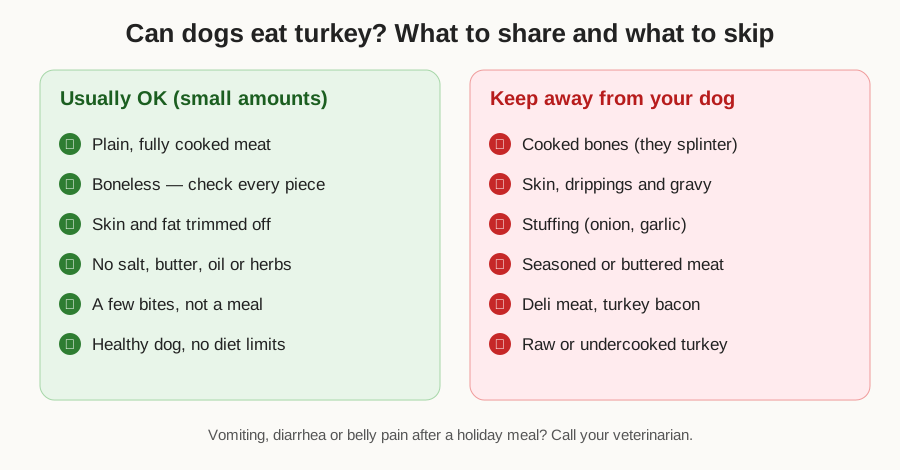
Quick answer: Yes, dogs can eat a small amount of plain, fully cooked, boneless, skinless turkey. Turkey itself is not toxic to dogs. The holiday version is the problem: cooked bones that splinter, fatty skin and drippings, and seasonings like onion and garlic. If you share, share a few bites of plain meat — or skip it and give a dog treat instead.
We are not veterinarians. This article is general information gathered from veterinary and animal-welfare sources, not medical advice for your dog. If your dog has a health condition, a special diet, or has eaten something worrying, call your veterinarian.
Is turkey safe for dogs?
Plain turkey is a normal dog food ingredient. The American Kennel Club notes that turkey “isn’t toxic to dogs,” that it shows up in many commercial dog foods, and that plain, fully cooked turkey without added salt, butter, oils, or seasonings can be a wholesome addition to a dog’s diet (AKC: Can Dogs Eat Turkey?).
The ASPCA takes a similar but more cautious line for the holidays: a small piece of boneless turkey is a fine treat, but it is safer to keep your pet’s diet the same as any other day, because fatty foods and poultry bones can be dangerous (ASPCA holiday safety tips).
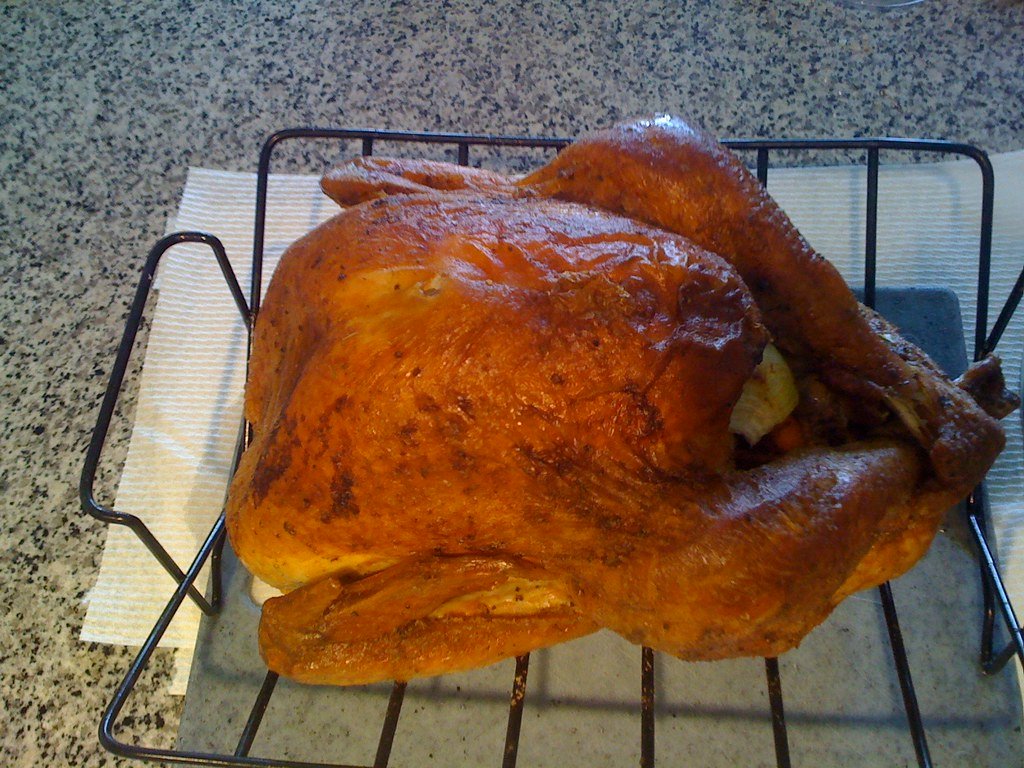
So the honest answer is “turkey, yes — Thanksgiving turkey, carefully.” The roast on your table has been brined, buttered, rubbed with herbs, stuffed, and basted, and almost all of that is what makes it risky for a dog.
Which parts of turkey are risky for dogs?
Cooked turkey bones
Never give a dog cooked turkey bones — not the drumstick, not the wishbone, not the carcass from the trash. AKC explains that cooked poultry bones become brittle and splinter, which can cause mouth injuries, choking, intestinal blockages that may need surgery, constipation, rectal bleeding, and punctures of the stomach or intestines.
Skin, fat, drippings, and gravy
Turkey skin is high in fat and usually coated in butter, oil, and seasoning. AKC notes that extra fat from rich holiday foods can contribute to pancreatitis, a painful and potentially serious inflammation of the pancreas. The Merck Veterinary Manual lists vomiting, weakness, abdominal pain, dehydration, and diarrhea among the most commonly reported signs in dogs. Gravy and pan drippings are concentrated fat and salt, so they belong in the same “no” pile.
Stuffing and seasonings
Stuffing and aromatics often include onions and garlic. AKC states that onions are toxic to dogs and garlic can be toxic in larger amounts. Since you cannot pick seasoning back out of meat that has cooked with it, the safest turkey for a dog is a piece from the inside of the breast, with no crust or skin, or turkey you cook plain for them.
Deli turkey, turkey bacon, and raw turkey
Processed turkey products are typically salty and seasoned, so they are not the same as plain roast turkey. Raw turkey and raw bones carry their own risks: AKC notes raw bones may expose dogs to bacteria such as salmonella and recommends asking your vet before feeding them.
How to share turkey with your dog safely
- Pick plain meat. White or dark meat is fine; choose pieces with no skin, crust, gravy, or stuffing touching them.
- Check for bones by hand. Pull the meat apart with your fingers so you can feel any small bone fragments before it goes in the bowl.
- Keep it small. Think a few bites for a small dog and a small handful for a large one — a treat, not a meal. Small portions are also less likely to upset a stomach that is not used to table food.
- Make sure it is fully cooked. No pink, undercooked pieces.
- Ask first if your dog has a condition. AKC recommends talking to your vet before adding table food if your dog has diabetes or a history of digestive problems, and that applies to dogs with a past bout of pancreatitis or a prescription diet too.
- Count it as part of the day’s food. Regular table scraps add up; AKC links them to weight gain and obesity-related problems.
If you would rather not share at all, that is a perfectly good choice. A dog-safe chew or a few of their usual training treats lets them join in without the risk. Some plain produce is fine in moderation too — see our guides on apples and bananas.
What not to do on Thanksgiving
- Don’t leave the carcass or bones in an open trash can. Use a lidded bin or take the bag outside right away. A lot of bone incidents happen after dinner, not at the table.
- Don’t let guests feed the dog. One bite from each visitor adds up to a fatty meal. Tell guests your house rule up front.
- Don’t leave plates at nose height. Coffee tables and low counters are an easy target while everyone is distracted.
- Don’t give “just a little” gravy on the kibble. It is mostly fat and salt.
- Don’t wait and see after a bone is swallowed. Call your vet for advice the same day.
Busy houses are also stressful for some dogs. If the doorbell sets yours off, our guide to stopping doorbell barking helps, and a quiet crate or room away from the action — see crates for anxious dogs — keeps them out of the kitchen while you cook.
When to call your vet
Contact your veterinarian or an emergency clinic promptly if your dog:
- Swallowed cooked turkey bones, especially if they are now gagging, drooling, or pawing at the mouth
- Is vomiting repeatedly, or has diarrhea, after eating rich food
- Seems painful in the belly, hunches up, or does not want to move
- Is weak, lethargic, or not interested in food or water
- Ate stuffing, gravy, or anything that contained onion or garlic
If you think your dog ate something toxic, the ASPCA Animal Poison Control Center is available at (888) 426-4435; a consultation fee may apply.
FAQ
Can dogs eat turkey skin?
It is best not to. Turkey skin is high in fat and usually seasoned, and fatty holiday food is linked to stomach upset and pancreatitis in dogs. Remove the skin before sharing any meat.
Can dogs eat dark meat turkey?
Plain, boneless dark meat is fine in small amounts. It is a little fattier than breast meat, so if your dog has a sensitive stomach, stick to small pieces of white meat.
Can dogs eat turkey bones if they are raw?
Raw bones do not splinter like cooked ones, but they are not risk-free and can carry bacteria such as salmonella. Talk to your veterinarian before offering any raw bones or turkey necks.
My dog ate turkey and now has diarrhea. What should I do?
Mild, short-lived diarrhea after a rich meal sometimes settles on its own, but call your vet if it continues, if your dog is vomiting, seems painful or lethargic, or if there is any chance they ate bones, stuffing, or onion. When in doubt, call — it is the fastest way to know whether your dog needs to be seen.