
A cat that poops outside the litter box is telling you something is wrong with its body, its box, or its surroundings — not acting out of spite. Rule out a medical problem with a vet visit first, then work through the box setup: cleanliness, size, litter, location, and box count.
Photo: Pexels.
Finding a mess on the rug is frustrating, and it is natural to wonder whether your cat is angry with you. It almost certainly is not. The Cornell Feline Health Center explains that house soiling is the most common behavior problem reported by cat owners, and the fix depends on finding the cause.
Why is my cat pooping outside the litter box?
A cat poops outside the litter box for one of three reasons: a medical problem makes it painful or urgent to go, something about the box puts the cat off, or the cat prefers a different surface or spot.
Medical causes come first because they are the most urgent. Digestive problems can make defecation painful, increase urgency, and reduce a cat’s control. A cat that links the box with pain may keep avoiding it even after the problem clears up.
Behavioral causes are more common overall. The ASPCA reports that at least 10% of all cats develop elimination problems at some point in their lives, and most trace back to the box, the litter, the location, or stress. A dirty box, a box that is too small, a sudden litter change, a noisy location, or a new pet can each send a cat looking elsewhere.
One cause often leads to another: a cat that cannot reach the box in time will go wherever it is, and may then prefer that new spot. So the order matters: check health first, fix the setup second, retrain the habit third.
How can you tell if it is medical or behavioral?
Watch the pattern before you change anything — it is the best clue you have, and what your vet will ask about first.
| Clue | Points toward medical | Points toward behavioral |
|---|---|---|
| Timing | Sudden change in a reliable cat | Starts after a move, new pet, or new litter |
| Stool | Diarrhea, hard stools, blood, mucus, worms | Normal stools, just in the wrong place |
| In the box | Cries, strains, perches on the edge | Enters and leaves fast, or will not enter |
| Location | Random spots, often near the box | Same spot every time |
| Other signs | Eating less, drinking more, vomiting, lethargy | Eating and playing normally |
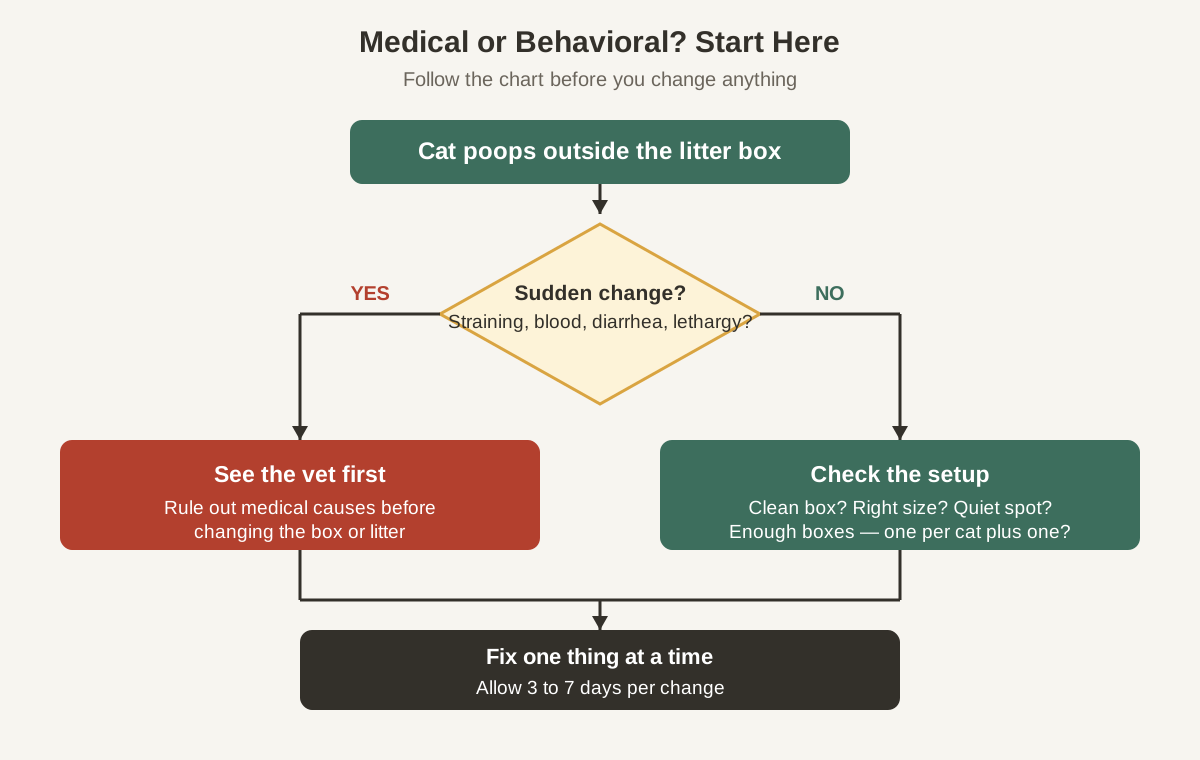
A sudden change in a previously reliable cat is the strongest signal to call the vet, because cats with medical conditions do not always act sick. If the stool looks abnormal, or your cat strains or cries, book the vet visit before buying a new box or switching litters. If the stool is normal and the problem started right after a household change, the cause is more likely behavioral — but a vet check is still the safe first step.
What medical problems cause a cat to poop outside the litter box?
Several conditions interfere with normal defecation. This is general information only, not a diagnosis — only a vet who examines your cat can identify the cause.
Constipation. A constipated cat strains and produces small, hard stools, and may not reach the box in time when the urge comes. Older cats and cats that drink too little are most at risk. Fresh water in several spots helps — a clean fountain encourages drinking, and our guide to how to clean a cat water fountain keeps that water appealing.
Diarrhea and digestive upset. Diarrhea creates urgency a cat cannot control. Causes range from a sudden diet change to parasites and inflammatory bowel disease. If it lasts more than a day or two, or you see blood or mucus, call your vet the same day.
Intestinal parasites. Worms are common in kittens and outdoor cats, and they can cause diarrhea, soft stools, and discomfort. Your vet can check a stool sample and prescribe treatment. Our guide to how to litter train a kitten covers the box habits to build while a kitten is still young.
Pain and arthritis. A cat with arthritis may find it painful to climb into a high-sided box or crouch. Seniors with sore joints often start going just outside the box because the box itself hurts to use. A low-entry box can solve this completely.
Cognitive decline in senior cats. Older cats can develop cognitive dysfunction, the feline version of dementia, which affects memory and learned habits — including where the box is. A confused senior cat needs a vet assessment, not retraining.
Other illnesses. Cornell notes that kidney and thyroid disease and diabetes can change how often a cat needs to go, and age-related disease can keep a cat from reaching the box in time. The message from both Cornell and the ASPCA is the same: take the cat to your veterinarian for a thorough examination and tests.
What behavioral and setup problems cause it?
Once medical causes are ruled out, the problem is almost always the box, the litter, the location, or stress.
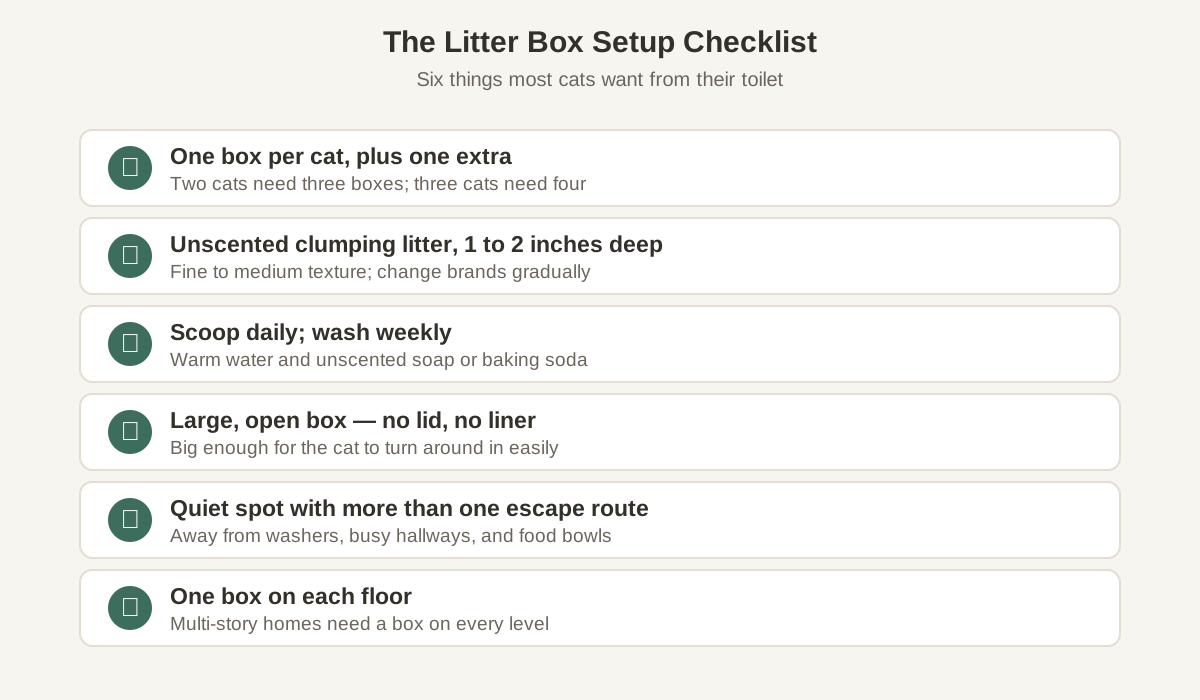
A dirty box. This is the single most common behavioral cause. Some cats refuse a box that contains any urine or feces at all. The ASPCA recommends scooping at least once a day and washing the box out with baking soda or unscented soap weekly. If you already scoop daily, try twice a day before changing anything else.
Too few boxes. The standard rule, endorsed by both Cornell and the ASPCA, is one box per cat, plus one extra. Two cats need three boxes; three cats need four. Boxes in different rooms count far more than boxes lined up side by side.
The wrong size or style. A box that is too small forces a large cat to perch on the rim. Most cats prefer a large, open box they can turn around in. Covered boxes hold odors inside, and many cats dislike them. Top-entry boxes are hard for kittens, seniors, and arthritic cats. Offer two styles side by side and let the cat choose.
The wrong litter. Cats usually develop a litter preference as kittens, and a sudden switch of brand, scent, or texture can stop them using the box. Most cats prefer clumping, unscented litter with a medium-to-fine texture, one to two inches deep. Change brands gradually over a week. Our comparison of the best non-tracking cat litter covers texture and tracking.
A bad location. Cats want a quiet spot where they can see people or animals approaching and have more than one way out. A box next to a washing machine, in a busy hallway, or in a corner with no escape route feels like a trap. A box beside the food bowls is also a problem — cats prefer to eat and eliminate in separate areas. In a multi-story home, put a box on each level.
Stress and household change. Moving house, a new baby, a new pet, or a change in routine can stress a cat enough to change its toilet habits. Multi-cat conflict is a frequent trigger: one cat may guard the hallway to the box or ambush another as it leaves. You may never see it — the victim simply stops going to the box.
Surface and location preferences. Some cats develop a preference for a surface like carpet, bedding, or potting soil. Once a cat has gone on a soft surface a few times, it can become a habit even if the original reason is gone. That is why cleaning matters as much as the fix — a spot that still smells like a toilet will keep being used as one.
A negative association. If something frightening happened while the cat was in the box — a loud noise, a dog barging in, a painful episode — the cat may associate the box with the scare. Signs include running in and leaving again very quickly, or going right next to the box. Never punish a cat for going outside the box: punishment does not teach a cat where to go, and the anxiety it causes usually makes the problem worse.
How do you fix it step by step?
Fix one thing at a time, in this order, and give each change a few days to work.
- Book the vet visit. Rule out medical causes first, especially if the change was sudden.
- Add boxes. Get to one box per cat plus one extra, spread across different rooms and floors.
- Deep-clean every box. Empty each box, scrub with warm water and unscented soap or baking soda, and refill with fresh unscented clumping litter, one to two inches deep.
- Remove lids and liners. Take the cover off every box for at least a few weeks. Most cats prefer an open box.
- Scoop twice a day for two weeks. Morning and evening, with a full litter change weekly.
- Offer a litter choice. Set two boxes side by side with different litters and see which one your cat uses.
- Move a box to the preferred spot. If your cat always goes in the same place, put a box there, then move it a few inches a day toward where you want it.
- Reduce stress. Keep the routine steady, give each cat its own food, water, and resting spots, and make sure no cat can block the path to the box.
- Wait and watch. Give each change three to seven days. If accidents continue after two weeks, go back to your vet or ask for a referral to a veterinary behaviorist.
How do you clean the spots your cat already used?
Cleaning is part of the treatment. Cats will re-soil areas that still carry their scent, so a spot that smells clean to you may still smell like a toilet to your cat.
Use an enzymatic cleaner designed to neutralize pet odors, available at most pet stores. Apply generously, let it soak as the label directs, and blot rather than scrub. Avoid ammonia or vinegar: both smell like urine to a cat and can make the spot more attractive. Regular soap only masks the odor for humans.
For a spot your cat returns to, make it less appealing: cover it with upside-down carpet runner, foil, or double-sided tape for a week or two, or place the cat’s food bowl or bed there. Cats prefer to eat and eliminate in separate areas, so turning a toilet spot into a dining spot breaks the habit.
When should you call the vet right away?
Call your vet the same day if you notice blood in the stool or black, tarry stools; diarrhea lasting more than 24 to 48 hours; straining with little or nothing produced; crying or obvious pain while eliminating; vomiting alongside the litter box change; eating much less or sudden weight loss; or a cat that cannot urinate at all — an emergency in male cats.
Frequently asked questions
Why does my cat poop right next to the litter box?
Your cat is probably telling you something about the box itself. Going next to it usually means the cat wants to use it but finds something wrong — the box is dirty, the litter is unpleasant, or the sides are too high. Deep-clean the box, remove the lid, and try a different litter.
Why does my cat poop on the bed or carpet?
Soft surfaces are the most common preference cats develop when they avoid the box. The bed or carpet may feel better on sore paws, or the cat may have formed a surface preference after going there once. Clean the spot with an enzymatic cleaner and add a box near it.
Is my cat pooping outside the litter box out of spite?
No. Cats do not have the kind of thinking needed for revenge. Cornell notes owners often misread house soiling as punishment, when the cause is almost always medical, a box problem, or stress. Punishing the cat only adds anxiety and makes the problem worse.
How many litter boxes should I have?
One box per cat, plus one extra, as a minimum. Two cats need three boxes, three cats need four, spread across different rooms. In a multi-story home, put at least one box on each floor. This rule, recommended by both the ASPCA and Cornell, is current as of November 2026.
A cat that poops outside the litter box is not being difficult. It is asking for help in the only way it can. Start with the vet, fix the setup, clean the spots properly, and give the changes time to work. Most cats go back to the box once the reason they left it is gone.
This article is general information, not veterinary advice. If your cat shows any sign of illness, pain, or distress, contact your veterinarian.