
The Shar Pei is a medium-sized Chinese dog breed famous for its deep wrinkles, blue-black tongue, and calm, loyal temperament. This ancient breed suits experienced owners who want a quiet, devoted companion and can commit to regular wrinkle care and early socialization. It is not a good fit for first-time owners or busy households that want a social, off-leash dog.
Where Does the Shar Pei Come From?
The Shar Pei is one of the oldest dog breeds in the world, with roots in southern China going back more than 2,000 years. Its name means “sand skin” in Cantonese, a reference to its rough coat. Early Shar Peis worked as farm dogs, guarding property, herding livestock, and hunting in villages around the South China Sea.
The breed nearly vanished in the 20th century, when political upheaval in China and heavy taxes on pet dogs pushed it to the edge of extinction. In 1973, Hong Kong breeder Matgo Law appealed to American dog lovers, a small group of Shar Peis was imported to the United States, and the rescue effort saved the breed. The American Kennel Club officially recognized the Chinese Shar-Pei in 1992.
Today’s Shar Pei looks different from the original farm dog. The modern “meat-mouth” type, with heavy wrinkles and a broad head, was shaped by selective breeding after the breed reached the West. The older, leaner “bone-mouth” type still exists and tends to have fewer skin problems — something worth asking a breeder about.
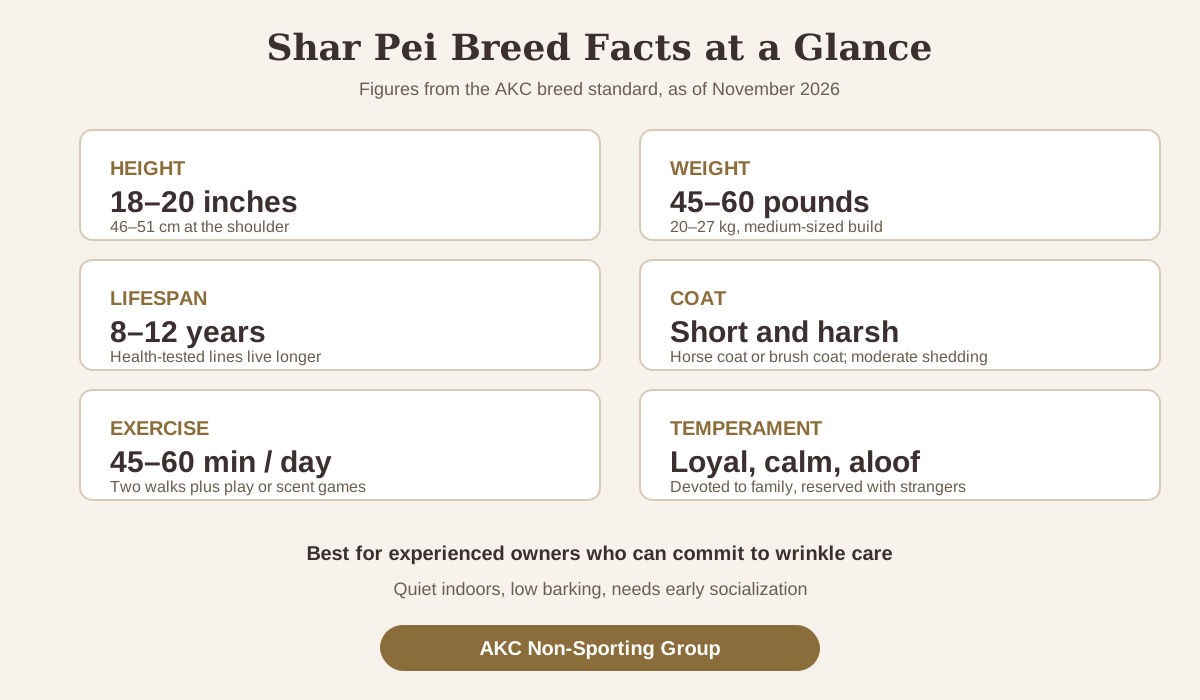
Shar Pei Breed Facts at a Glance
| Fact | Detail |
|---|---|
| Height | 18–20 inches (46–51 cm) at the shoulder |
| Weight | 45–60 pounds (20–27 kg) |
| Lifespan | 8–12 years |
| Coat | Short, harsh; horse coat or brush coat |
| Colors | Black, cream, fawn, red, sable, blue, lilac, apricot |
| Shedding | Moderate; heavier seasonal shedding |
| Exercise needs | 45–60 minutes of daily activity |
| Temperament | Loyal, calm, aloof with strangers |
| Good with children | Better with older children |
| Good with other dogs | Can be dog-selective |
| Barking level | Low |
| AKC group | Non-Sporting Group |
All figures above reflect the AKC breed standard and breed-health guidance as of November 2026.
What Is a Shar Pei’s Temperament Like?
A Shar Pei is loyal to the point of devotion. This breed bonds deeply with its family and often chooses one person as its favorite. It is calm indoors, quiet by nature, and content to lie near its people.
That loyalty comes with a reserved streak. Shar Peis are famously aloof with strangers — polite but uninterested, and sometimes suspicious. When we compared breed standards, vet guidance, and verified owner feedback, this loyal-but-aloof profile came up again and again. The breed was developed as a guard dog, and that instinct is still there: a Shar Pei will watch, assess, and protect its home without being needlessly aggressive.
Are Shar Peis Good with Kids and Other Pets?
Shar Peis can be good family dogs, but they do best with older children. The breed’s low tolerance for rough handling means toddlers who grab ears or pull wrinkles are a bad combination. Children aged 10 and up who understand how to respect a dog’s space usually do well with a Shar Pei.
Early socialization decides how a Shar Pei behaves around other animals. The breed can be dog-selective, especially with dogs of the same sex, and some Shar Peis never enjoy dog parks. A Shar Pei raised with cats and other pets from puppyhood usually accepts them, but introductions to unfamiliar animals should be slow and supervised.
How Much Exercise Does a Shar Pei Need?
A Shar Pei needs about 45–60 minutes of activity a day: two walks of 20–30 minutes, plus some play or scent games in the yard. Puzzle feeders, snuffle mats, and short training sessions of 5–10 minutes keep the breed mentally engaged — a bored Shar Pei becomes a destructive or stubborn one.
Heat is the real limit on Shar Pei exercise. The breed’s short muzzle and heavy wrinkles make it prone to overheating, so summer walks should happen early in the morning or after sunset. If you want a comparison for how exercise needs vary by breed, our guide on how much exercise a Labrador needs shows what a high-energy breed demands by contrast. Off-leash freedom is not a Shar Pei strength: the breed has a strong prey drive, so a fenced yard and a leash are the safe defaults.
How Do You Groom a Shar Pei?
Grooming a Shar Pei is simple in one way and demanding in another. The short coat needs only a weekly brush with a rubber curry brush or bristle brush to remove loose hair. Bathing is infrequent — once every 6–8 weeks is enough for most Shar Peis. Our guide on how often you should bathe a dog explains why over-bathing strips the coat’s natural oils.
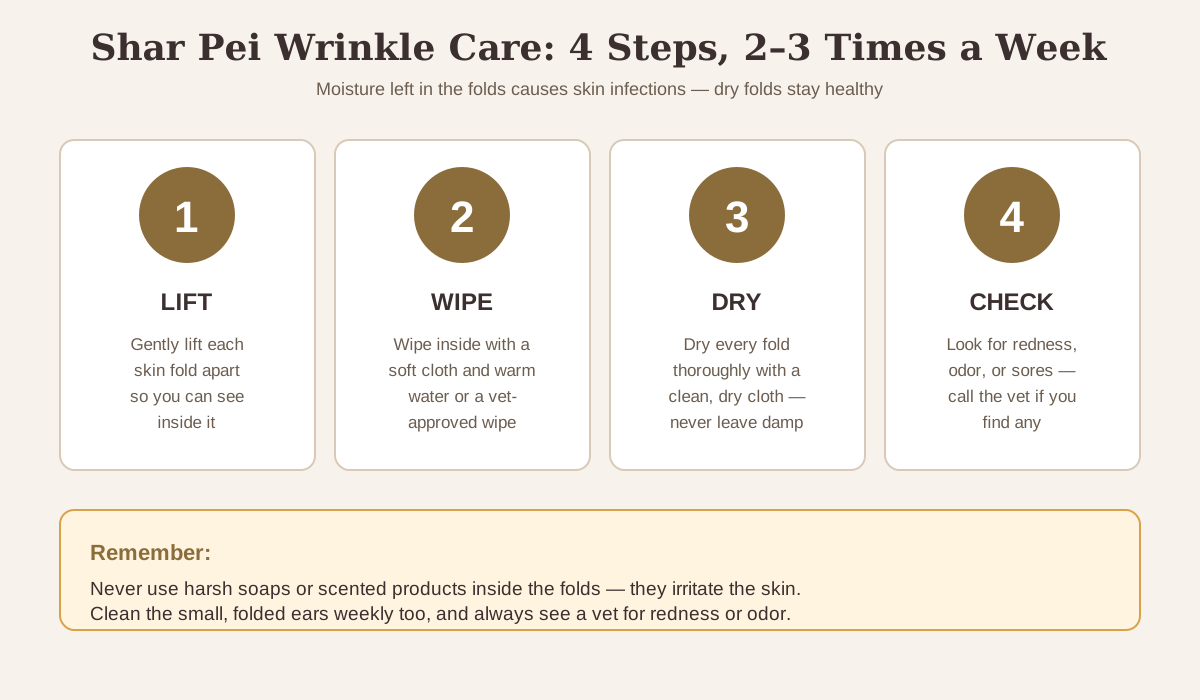
The demanding part is the wrinkles. The deep skin folds that make the Shar Pei famous trap moisture, dirt, and bacteria, and they need cleaning two to three times a week:
- Lift each fold gently and wipe inside with a soft cloth dampened with warm water or a vet-approved wipe.
- Dry every fold thoroughly — moisture left behind is what causes infections.
- Check for redness, odor, or sores while you clean; any of these is a reason to call the vet.
- Never use harsh soaps or scented products inside the folds.
- Clean the ears weekly, since the breed’s small, folded ears trap wax and moisture.
Nails need trimming every 2–3 weeks, and teeth should be brushed several times a week. The Shar Pei sheds moderately all year, with a heavier shed in spring and fall.
How Do You Train a Shar Pei?
Training a Shar Pei rewards patience and punishes force. The breed responds to positive reinforcement — treats, praise, and play — and shuts down under harsh corrections or raised voices. Short, upbeat sessions work best; long, repetitive drills bore a Shar Pei fast.
Socialization is the most important training task for this breed. Between 8 and 16 weeks, a Shar Pei puppy should meet many people, hear household sounds, and encounter other vaccinated dogs. That early exposure turns a naturally suspicious puppy into a confident adult; owners who skip it often end up with a reactive or fearful dog.
House training is usually straightforward — Shar Peis are clean dogs that dislike soiling their space — but crate training helps. The breed also benefits from a clear, consistent routine: same feeding times, same walk times, same rules. Inconsistency confuses a Shar Pei, and a confused Shar Pei makes its own rules. Recall training deserves special attention, since Shar Peis are not known for reliable recall — practice in a fenced area and never trust an off-leash Shar Pei near traffic.
What Should You Feed a Shar Pei?
A Shar Pei does best on a high-quality commercial dog food formulated for medium-sized breeds, with a named animal protein as the first ingredient. Adult Shar Peis typically eat 2–3 cups of dry food a day, split into two meals. Puppies need a puppy-formulated food until about 12–14 months of age, and treats should stay under 10% of daily calories.
Food allergies and sensitivities are common in this breed, and skin problems are often the first sign. If your Shar Pei develops itchy skin, ear infections, or constant paw licking, food may be part of the picture — our article on why dogs lick their paws covers the most common causes, including allergies. An elimination diet under veterinary supervision is the reliable way to identify a trigger.
What Health Problems Do Shar Peis Have?
The Shar Pei is a beautiful breed with a real health burden, and prospective owners should understand it before committing. The American Kennel Club’s breed page notes that Shar Peis are prone to skin and eye conditions linked to their distinctive folds (akc.org/dog-breeds/chinese-shar-pei/), and the American Veterinary Medical Association stresses that breed-specific health risks should be discussed with a veterinarian before buying (avma.org). Cornell University’s College of Veterinary Medicine also publishes guidance on inherited conditions in purebred dogs (cornell.edu).
Skin-fold dermatitis (pyoderma). Moisture and bacteria trapped in the wrinkles cause red, smelly, infected skin. Regular fold cleaning and drying is the main prevention, and infections need veterinary treatment — never treat them at home with human creams.
Entropion. The eyelids roll inward, so the eyelashes rub against the cornea, causing pain, tearing, and ulcers. Many puppies need a temporary eyelid “tacking” procedure, and some adults need corrective surgery.
Familial Shar Pei fever (FSF). An inherited autoinflammatory condition that causes recurring fevers, often with swollen hocks. Episodes usually last 24–36 hours. The serious risk is amyloidosis — protein deposits that can damage the kidneys over time. Any Shar Pei with unexplained recurring fever should be seen by a vet promptly.
Hip dysplasia. The hip joint develops abnormally, leading to arthritis and pain. Responsible breeders screen their breeding dogs’ hips — ask to see those results.
Ear infections. The breed’s tiny, folded ears trap moisture and wax, making infections frequent. Weekly cleaning helps, but recurring infections need a vet to find the underlying cause. Annual eye checks also matter, since the breed is prone to glaucoma and retinal issues on top of entropion.
None of this means every Shar Pei will be sick. It means the breed’s average vet bills run higher than most, and pet insurance or a dedicated savings fund is a sensible plan. If you notice recurring fever, eye redness, skin odor, or ear discharge, see a veterinarian rather than trying to diagnose the problem yourself.
How Much Does a Shar Pei Cost?
A Shar Pei puppy from a reputable breeder typically costs $1,000–$2,500 in the United States as of November 2026. Expect $1,000–$1,500 a year in routine vet care, food, and supplies, plus more if skin, eye, or fever issues develop.
Adoption is the lower-cost route and the kinder one. Shar Pei rescue organizations in the US regularly have dogs available, often because owners underestimated the grooming and health commitment. An adult rescue also lets you see the dog’s real temperament and wrinkle severity before committing.
Before buying, ask any breeder for hip screening results, eye exam certificates, and a health history of the parents, including any history of Shar Pei fever. A breeder who cannot provide these is a breeder to walk away from. For a sense of how breed choice shapes the ownership experience, our comparison of Golden Retriever vs Labrador shows what a lower-maintenance, family-first breed looks like.
Who Should Not Get a Shar Pei?
A Shar Pei is a poor choice for first-time dog owners. The breed’s independence, guarding instinct, and health needs demand an owner who already understands dog body language, training, and vet care. It is also a poor choice for households that want a dog park regular, an off-leash hiking partner, or a dog that loves every stranger. Finally, it is a poor choice for anyone unwilling to clean skin folds several times a week or pay above-average vet bills.
Frequently Asked Questions
Are Shar Peis good family dogs?
Shar Peis can be good family dogs for households with older children, but they are not the best choice for families with toddlers. They bond deeply with their family and are naturally protective, but they dislike rough handling.
Do Shar Peis shed a lot?
Shar Peis shed a moderate amount year-round, with heavier shedding in spring and fall. Weekly brushing helps, but it will not eliminate shedding.
Are Shar Peis aggressive?
Shar Peis are not inherently aggressive, but they are protective and aloof with strangers, and they can be dog-selective. Proper early socialization and consistent training keep a Shar Pei’s guarding instinct confident and controlled rather than fearful or reactive.
How long do Shar Peis live?
Shar Peis live 8–12 years on average. Dogs from health-tested parents with well-managed skin and fever issues tend to live longer, while dogs with chronic amyloidosis or severe skin disease may live shorter lives.
Are Shar Peis easy to train?
Shar Peis are moderately difficult to train because they are independent and stubborn, though they are also intelligent and food-motivated. Short, positive training sessions work; harsh corrections do not.
Do Shar Peis need a lot of grooming?
Shar Peis need moderate grooming: a weekly brush and a bath every 6–8 weeks for the coat, plus wrinkle cleaning two to three times a week. The wrinkle care is the demanding part — skipping it leads directly to skin infections.
The Bottom Line
The Shar Pei is a striking, ancient breed with a loyal heart and a demanding care routine. It rewards experienced, patient owners with a quiet, devoted companion. But its wrinkles, its health risks, and its independent nature are not quirks to overlook — they are the terms of the deal.
If you can commit to wrinkle care, early socialization, and the vet bills that may come with this breed, a Shar Pei can be a wonderful dog. If you want a social, low-maintenance, first-time-friendly breed, choose something else. Either way, talk to a veterinarian and a reputable breeder or rescue before you decide.