
Quick answer: Yes, most healthy dogs can eat apples as an occasional treat. Serve plain, washed apple slices or small cubes with the core, seeds and stem removed, and keep it to a slice or two at a time. Skip sweetened, spiced or baked apple products.
We are not veterinarians. This article is general information gathered from veterinary and kennel-club sources, not a substitute for advice from your own vet – especially if your dog has diabetes, a sensitive stomach, food allergies or a weight-management plan.
Are apples good for dogs?
Apples can be a crunchy, low-fat treat. According to the American Kennel Club (AKC), apples are a source of vitamin C, vitamin A, potassium and antioxidants, and the peel adds fiber. Chewing crisp apple pieces may help a little with plaque, but it does not replace brushing – see our guide to pet dental care for what actually keeps teeth clean.
Apples also contain natural sugar – the AKC notes about 19 grams in a whole apple – which is why they belong in the “occasional treat” category, not the daily food bowl.
Which parts of an apple are safe for dogs?
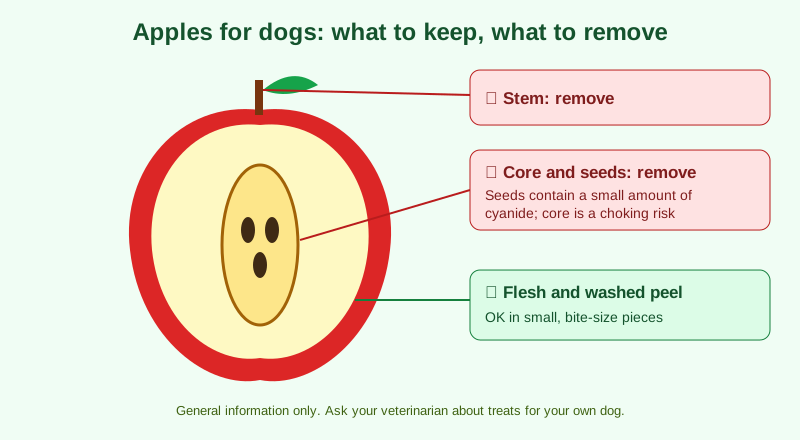
- Flesh: safe in small amounts.
- Peel: generally fine and adds fiber; peeling can make apple easier to digest for dogs with sensitive stomachs. Wash it well first.
- Seeds: remove them. The AKC explains that apple seeds contain a small amount of cyanide, which can harm dogs in large amounts.
- Core and stem: remove them. They are tough and can be a choking hazard or cause a digestive blockage.
How do you safely give a dog apple?
- Wash and scrub the apple to remove surface residue.
- Cut it into slices, then remove the core, every seed and the stem.
- Cut the slices into bite-size cubes that suit your dog’s size – smaller for toy breeds and fast eaters.
- Peel the pieces if your dog has a sensitive stomach or is trying apple for the first time.
- Offer one small piece and watch for any stomach upset over the next day before giving more.
Fresh apple pieces also work as low-fat training rewards for some dogs. If you use them that way, count them as part of the day’s treats – our article on puppy training treats covers how to keep reward portions small.
How much apple can a dog eat?
The AKC suggests limiting apples to one or two slices, since too much can cause a bellyache or diarrhea. Treats in general should be a small part of your dog’s diet so they don’t crowd out a complete and balanced food. A practical rule of thumb:
- Small and toy dogs: a few small cubes.
- Medium dogs: about one slice.
- Large dogs: one to two slices.
These are starting points, not prescriptions. If your dog is overweight, diabetic or on a special diet, ask your veterinarian before adding any fruit.
Can puppies eat apples?
The AKC says puppies can have apples too. Start with a single small slice or cube, cut very small, and watch for loose stools. Puppies are still adjusting to food, so keep new treats rare and simple.
What about applesauce, apple chips and other apple products?
- Plain, unsweetened applesauce: OK in small amounts. Check the label for added sugar.
- Homemade apple chips: plain, cored apple slices baked low and slow until crisp are fine as an occasional treat.
- Apple pie, apple crumble, caramel apples: avoid. They contain added sugar, fat and often spices.
- Anything with nutmeg: avoid. The AKC warns that nutmeg can cause stomach upset in small amounts and serious signs in large amounts.
- Sugar-free apple products: check for xylitol. The ASPCA warns that xylitol can cause low blood sugar and potentially liver damage in dogs.
Which dogs should skip apples or check with a vet first?
Plain apple is a mild food, but it is not the right treat for every dog. Ask your veterinarian before offering apple if your dog:
- Has diabetes or is on a prescription diet, since fruit adds sugar and can interfere with a carefully balanced plan.
- Is overweight or on a weight-loss program, where every treat calorie counts.
- Has a history of pancreatitis, chronic diarrhea or a sensitive stomach.
- Has known food allergies or is in the middle of an elimination diet trial.
- Gulps food without chewing – large pieces are a choking risk, so cut apple very small or grate it over food.
Also stop offering apple and call your vet if your dog has ongoing gas, loose stools or itching after eating it. Some dogs simply do not tolerate certain fruits well, and that is fine – there are plenty of other safe, simple treats.
My dog ate an apple core or seeds – what should I do?
Don’t panic. A dog that swallows a few seeds or one core is often fine, but watch closely for the next 24–48 hours:
- Gagging, coughing or pawing at the mouth (possible choking).
- Repeated vomiting, a painful or bloated belly, straining or not passing stool (possible blockage).
- Unusual weakness, trouble breathing or bright red gums.
When to call your vet
Call your veterinarian right away if your dog shows any of the signs above, ate a large number of seeds or several cores, is a small breed that swallowed a whole core, or has an allergic reaction (itching, swelling, hives) after eating apple. If your vet is closed, the ASPCA Animal Poison Control Center can be reached at (888) 426-4435 (a consultation fee may apply).
Frequently asked questions
Can dogs eat apples with the skin on?
Yes, washed apple peel is generally fine for healthy dogs and adds fiber. Peel the apple if your dog gets an upset stomach easily.
Can dogs eat apples every day?
A slice or two a few times a week is a safer pattern for most dogs. Daily fruit adds sugar and calories, so talk to your vet if you want to make it a regular part of your dog’s diet.
Are green apples better than red apples for dogs?
Both are fine prepared the same way. Some green varieties are tarter, and some dogs simply prefer one over the other.
What other fruits can dogs eat?
Bananas are another common dog-safe fruit in small amounts – see can dogs eat bananas. Always check before sharing any new food; some fruits, like grapes and raisins, are dangerous for dogs. If your dog keeps snacking on plants in the yard instead, read why does my dog eat grass.
Pingback: Best Puppy Training Treats (2026): Small, Soft Picks That Work | Pets Of Earth