
Photo: White and Orange Cat Walking Out of a Litter Box by Nadiye Odabaşı, via Pexels.
Quick answer: Flushable cat litter is plant-based litter — usually corn, wheat, wood, or paper — that the maker says breaks down in water well enough to flush. In practice, most plumbers and water authorities say not to flush any cat litter, even the kind labeled flushable. The safer routine is to scoop the waste into a bag and put it in the trash.
This guide is for cat owners who saw the word “flushable” on a bag and wondered whether the toilet is really a safe shortcut. We compared what manufacturers claim with guidance from water authorities and university research, so you can see what the label promises and what actually happens after you flush.
What is flushable cat litter?
Flushable cat litter is litter made from plant materials instead of mined clay. The most common types are corn, wheat, wood fiber, and recycled paper. These litters clump when wet, and the makers say the clumps soften and break apart in water, so you can scoop them into the toilet instead of bagging them.
The best-known example is World’s Best Cat Litter, made from whole-kernel corn. The company says all of its formulas have been tested and proven flushable and safe for sewer and septic systems, and it tells owners to flush only one to two clumps at a time.
Two things are worth knowing before you trust the label. First, “flushable” is a manufacturer’s claim, not a regulated standard. No federal rule in the United States defines how fast a product must break down or whether it is safe for every plumbing system. Second, flushable litter is still litter. It is built to absorb liquid and hold together, which is the opposite of what toilet paper does.
Clay litter is the clearest contrast. Standard clumping clay is made from bentonite, a mineral that swells as it absorbs liquid and hardens into a heavy mass. It never breaks down in water, so it should never go near a toilet. Silica crystal litter is no better: the tiny crystals absorb moisture and do not dissolve, so they pile up in pipe bends over time. Plant-based litter breaks down faster than either one, but “faster” is not the same as “safe to flush.”
Can you flush cat litter down the toilet?
For most homes, the honest answer is no — not even the kind labeled flushable. The risks fall into three groups: your pipes, your septic system, and the water beyond your house.
Start with the plumbing. Household drains are built for human waste and toilet paper, both of which fall apart within seconds of hitting water. Cat litter does not behave that way. Even plant-based clumps need time and plenty of water to soften, and a low-flow toilet may not give them either. In older homes with narrow pipes, or in any home with a partial clog already forming, litter can settle and build up. The Bennington County Solid Waste Alliance puts it plainly: “Cat litter does not dissolve in water and will create clogs even if it is labeled ‘flushable.'”
Septic systems make the problem worse. A septic tank relies on bacteria to break down human waste and toilet paper. Flushed litter adds solids that break down slowly or not at all, so sludge builds up faster and the tank needs pumping more often. The extra material can also clog the drain field, which is an expensive repair.
The third problem is the one most owners never hear about: the feces itself. Cat feces can carry Toxoplasma gondii, a parasite that cats shed in their stool. Standard wastewater treatment does not reliably kill its eggs, called oocysts, so flushed cat waste can carry them into rivers and the sea. Researchers at the University of California, Davis traced fatal strains of the parasite in California sea otters back to domestic cats, and found that up to 70% of stranded southern sea otters were infected. Their advice is direct: dispose of cat feces in a bag in the trash, not outdoors or in the toilet.
California took the issue seriously enough to legislate it. A 2006 state law requires cat litter sold in California to carry a warning label telling owners not to flush it or dump it in storm drains. No litter on the market can make cat feces safe to flush, because the parasite risk comes from the waste, not from the litter material. That is the key point the label never mentions: even if the litter dissolves perfectly, the feces it carries still reaches the water.
How to dispose of cat litter safely
Bagging and binning used litter is simple, and it is the method water authorities and wildlife researchers agree on. Follow these steps every time you scoop.
- Scoop solids and urine clumps out of the box at least once a day, and drop them straight into a small bag.
- Tie the bag shut so nothing leaks or smells, and place it in your household trash or an outdoor bin with a tight lid.
- When you do a full litter change, bag all of the old litter the same way instead of pouring it down a drain or tipping it outside.
- Wipe the empty box with warm water and mild soap, let it dry, and refill it with fresh litter.
- Wash your hands with soap and water after every scoop.
- Never dump used litter in the yard, in a garden bed, in a gutter, or in a storm drain, and do not add it to a compost pile.
If you are setting up litter for a new kitten, read our guide on how to litter train a kitten first, and keep enough boxes for the household by following the one-box-per-cat-plus-one rule.
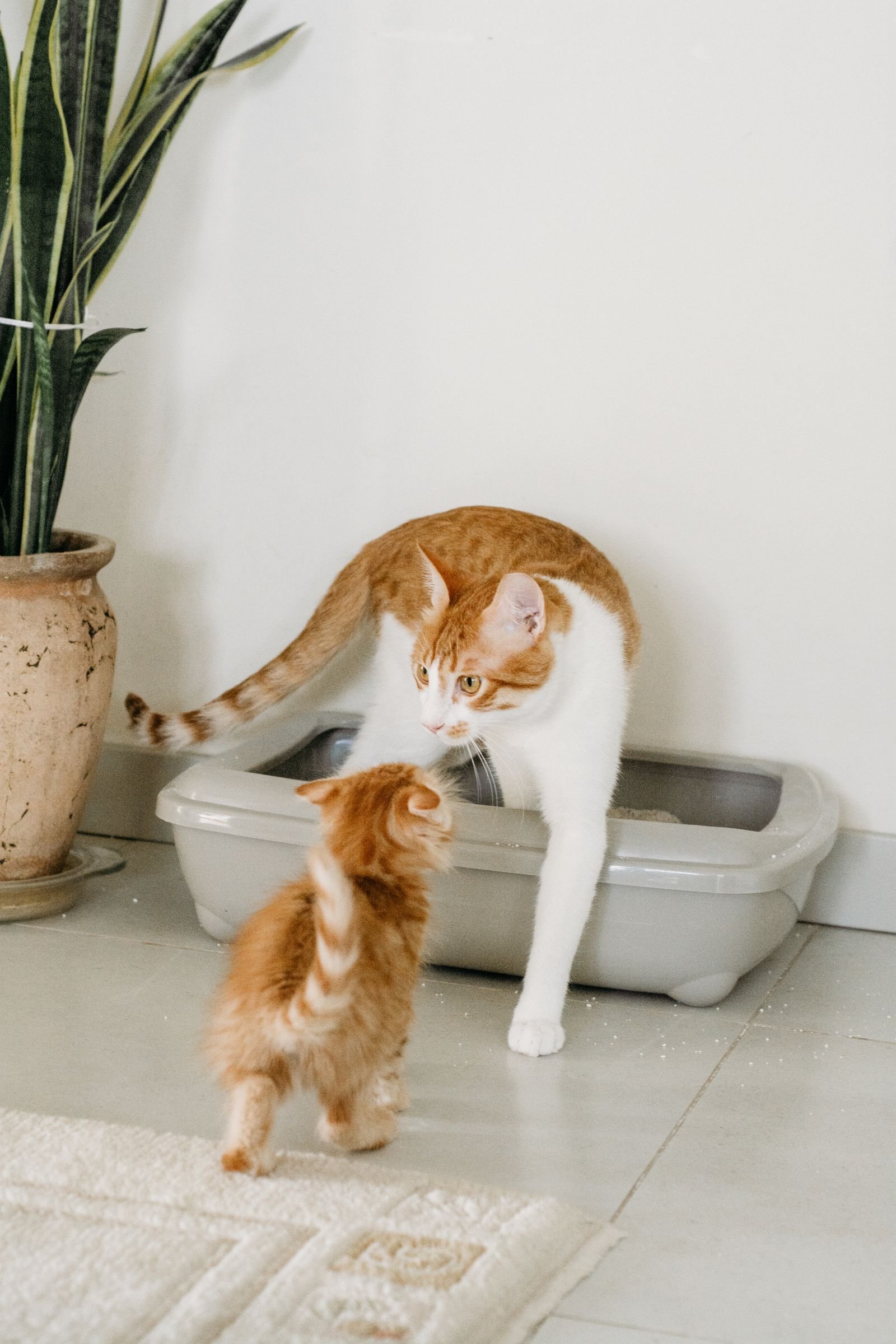
Photo: A Mother and Child Orange Tabby Cats by Nadiye Odabaşı, via Pexels.
What not to do with flushable cat litter
- Do not flush litter on a septic system. Solids build up in the tank and can clog the drain field.
- Do not flush a whole box at once. Even a maker that calls its litter flushable tells owners to flush one or two clumps at a time, with a full flush between them.
- Do not trust the label over your local rules. Some cities and water districts ban flushing pet waste outright, and the bag’s claim does not override them.
- Do not dump used litter outside. Rain carries parasite eggs from soil into waterways, which is how they reach wildlife in the first place.
- Do not switch litters overnight. A sudden change in texture or smell can make a cat avoid the box. Mix the new litter with the old one for a few days, and if your cat starts going elsewhere, see why your cat poops outside the litter box.
Flushable litter vs clay vs crystal: a quick comparison
| Litter type | Made from | Maker calls it flushable? | Breaks down in water? | Safest disposal |
|---|---|---|---|---|
| Corn-based flushable | Whole-kernel corn | Yes — World’s Best says all formulas are flushable and septic-safe | Softens and breaks apart over time | Bag in the trash; flush only if local rules allow it |
| Wheat-based flushable | Wheat and other grains | Yes, for most brands | Softens and breaks apart over time | Bag in the trash; flush only if local rules allow it |
| Wood or paper-based | Wood fiber or recycled paper | Some brands; at least one wood brand removed the claim | Breaks apart slowly, faster than clay | Bag in the trash |
| Clay clumping | Bentonite clay | No | No — swells and hardens | Bag in the trash, never flush |
| Silica crystal | Silica gel crystals | No | No — crystals do not dissolve | Bag in the trash, never flush |
If odor control matters more to you than the flushable label, compare low-dust options in our roundup of the best non-tracking cat litter. If you use baking soda to fight box smell, check whether you can put baking soda in cat litter first, because the safe amount depends on your cat.
FAQ
Is flushable cat litter safe for septic systems?
Not as a blanket rule. World’s Best says its corn litter was tested and proven septic-safe, but water and septic guidance says not to flush any cat litter, and septic tanks are built for human waste and toilet paper only. Before flushing anything, ask your septic service and check your local rules — and when in doubt, bag it and bin it.
Can I flush just the poop, without any litter?
No. The parasite risk comes from the feces, not the litter, and standard wastewater treatment does not reliably kill Toxoplasma eggs. Scoop the poop into a bag, tie it shut, and put it in the trash, even if no litter is attached.
What is the most eco-friendly way to dispose of cat litter?
Use a plant-based litter, scoop daily, and bag the waste in the trash. Plant litters avoid strip-mined clay, and bagging keeps parasite eggs out of waterways. Do not compost used litter and do not dump it outside — rain carries the eggs into streams and the sea.
Why do bags say flushable if experts say don’t flush?
Because “flushable” is a marketing claim about the material, not a safety standard for your pipes or your water. The word describes a clump that softens in water; it does not mean flushing is safe for every toilet or septic tank. The label answers a different question than the one you are actually asking.