
Veterinarians warn that most homemade dog food recipes are nutritionally incomplete, and feeding one long-term can cause bone problems, weak immunity, and organ damage. A 2013 study in the Journal of the American Veterinary Medical Association found that 95 percent of 200 home-prepared recipes failed to meet basic nutrient standards. The fix is not to stop cooking — it is to use a vet-formulated recipe and follow it exactly.
That warning surprises many owners. Cooking for a dog feels like the healthiest choice: fresh ingredients, no mystery fillers, full control over what goes in the bowl. The problem is that a healthy-looking meal can still be missing nutrients a dog cannot make on its own — meat, rice, and vegetables often lack enough calcium, zinc, vitamin D, and essential fatty acids.
Why are veterinarians warning about homemade dog food?
The core warning is about balance, not about cooking itself. A dog needs roughly 40 essential nutrients in the right amounts and ratios, and a recipe that misses even one of them can cause harm over months of daily feeding. Veterinarians see the results in clinics: puppies with bowed legs from calcium deficiency and adult dogs with thin coats and slow wound healing from zinc deficiency.
The most cited evidence is a 2013 study in the Journal of the American Veterinary Medical Association, which analyzed 200 home-prepared recipes from books, websites, and veterinary textbooks. Only a small handful met National Research Council and AAFCO nutrient standards, and 83 percent had multiple deficiencies.
Veterinary nutritionists also warn that recipes change in the kitchen: an owner swaps chicken thighs for breast, skips the supplement, or eyeballs the oil. Each small change shifts the nutrient balance, so the WSAVA recommends owners only use homemade recipes formulated or reviewed by a board-certified veterinary nutritionist.
What nutrients do homemade dog food recipes most often miss?
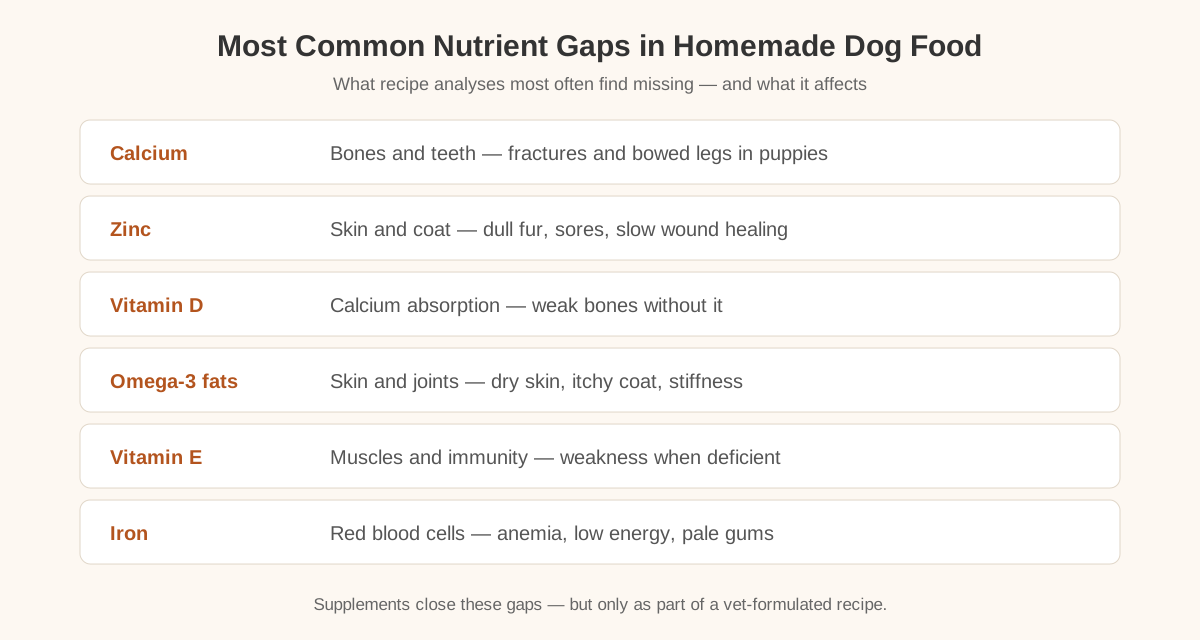
The same gaps show up again and again in recipe analyses. Calcium tops the list, because meat is naturally low in calcium and high in phosphorus. Vitamin D, zinc, iron, and vitamin E follow close behind, omega-3 fatty acids are often absent because most recipes use no fish oil, and iodine is easy to miss.
| Nutrient | Why recipes miss it | What deficiency can cause | How vets close the gap |
|---|---|---|---|
| Calcium | Meat is low in calcium and high in phosphorus | Bowed legs and fractures in puppies, weak bones in adults | Measured calcium carbonate |
| Zinc | Plant-heavy recipes and some meats are low in zinc | Dull coat, skin sores, slow wound healing | Zinc supplement dosed to the recipe |
| Vitamin D | Few home ingredients contain enough vitamin D | Bone weakness and poor calcium absorption | Vitamin D in the supplement mix |
| Vitamin E | Cooking and storage destroy vitamin E in oils | Muscle weakness and immune problems | Vitamin E added fresh at the right dose |
| Omega-3 fatty acids | Most recipes skip fish or fish oil entirely | Dry skin, itchy coat, joint stiffness | Measured fish oil |
| Iron | Lean meat alone may not supply enough iron | Anemia, low energy, pale gums | Iron from organ meat or a supplement |
The calcium-to-phosphorus ratio deserves special attention. Dogs need calcium and phosphorus in a ratio between roughly 1:1 and 2:1, but a meat-heavy bowl without a calcium source can easily hit 1:10 or worse, pulling calcium out of bones over time. In puppies the damage can be permanent, which is why veterinarians are most urgent about homemade diets for puppies, pregnant dogs, and nursing dogs.
Supplements are not optional extras in a homemade diet. They are part of the recipe. A veterinary nutritionist designs the supplement blend to fill the exact gaps in that recipe’s ingredients, so a generic multivitamin from the pet store does not work. Some nutrients, such as vitamin D and vitamin A, become toxic in excess. Cornell University College of Veterinary Medicine advises owners not to add vitamins or minerals without checking with a vet (Cornell on dog diets and supplements).
Which foods should never go in homemade dog food?
Some everyday human foods are toxic to dogs, and a few appear in recipes that circulate online. The ASPCA Animal Poison Control Center lists the foods below as ones to keep out of your dog’s bowl entirely, and it advises owners to note how much was eaten and call a vet or poison control immediately if a dog eats any of them (ASPCA people foods to avoid).
| Food | Why it is dangerous | Symptoms to watch for |
|---|---|---|
| Onion, garlic, chives | Damage red blood cells and cause anemia | Weakness, pale gums, rapid breathing, dark urine |
| Grapes and raisins | Can cause sudden kidney damage, even in small amounts | Vomiting, lethargy, loss of appetite, less urination |
| Xylitol (birch sugar) | Triggers a dangerous insulin release and liver damage | Vomiting, wobbliness, seizures, collapse within hours |
| Chocolate, coffee, caffeine | Methylxanthines overstimulate the heart and nerves | Panting, restlessness, tremors, abnormal heart rhythm |
| Macadamia nuts | Cause weakness and tremors in dogs | Weak back legs, vomiting, fever, tremors within 12 hours |
| Cooked bones | Splinter and can puncture the gut or block it | Choking, vomiting, bloody stool, belly pain |
Onion and garlic hide in many human recipes. A clove of garlic in a stew or onion powder in a seasoning blend can deliver a dose that matters, especially for small dogs. The damage is cumulative: red blood cells break down over days, so a dog can look fine at dinner and become weak a week later.
Grapes and raisins are the most unpredictable item on the list. Some dogs eat a few and show no symptoms; others develop kidney failure from a small handful. The only safe rule is zero grapes and zero raisins, including trail mix and baked goods that contain them.
Xylitol is the most urgent. It hides in sugar-free peanut butter, sugar-free baked goods, some toothpastes, and sugar-free gum. A small amount can send a dog’s blood sugar crashing within an hour, and larger amounts can cause liver failure within a day. Always read the label on any peanut butter you use.
Cooked bones need their own warning. Cooking makes bones brittle, so they splinter into sharp pieces that can cut the mouth, throat, or intestines. Bones also do not clean teeth the way many owners believe — the WSAVA notes that feeding bones does not reduce plaque or tooth loss. If dental health is your goal, our guide on pet dental care covers brushing and vet-approved chew options that actually help.
Are raw meat and cooked bones safe for dogs?
Raw meat is one of the most debated topics in homemade feeding, and the veterinary consensus is clear: raw meat adds risk without proven benefit. The WSAVA Global Nutrition Committee states there is no evidence that raw meat-based diets provide health benefits over commercial or balanced homemade cooked diets, and it warns that raw meat can carry Salmonella, E. coli, Listeria, and Campylobacter (WSAVA raw meat-based diets guidance).
Freezing does not solve the problem. The WSAVA notes that freezing, dehydration, and freeze-drying do not kill all bacteria in raw meat. Households with small children, pregnant people, or anyone with a weakened immune system face the highest risk, because the bacteria spread through handling the food, the dog’s bowl, and even the dog’s stool.
How can you cook for your dog safely?
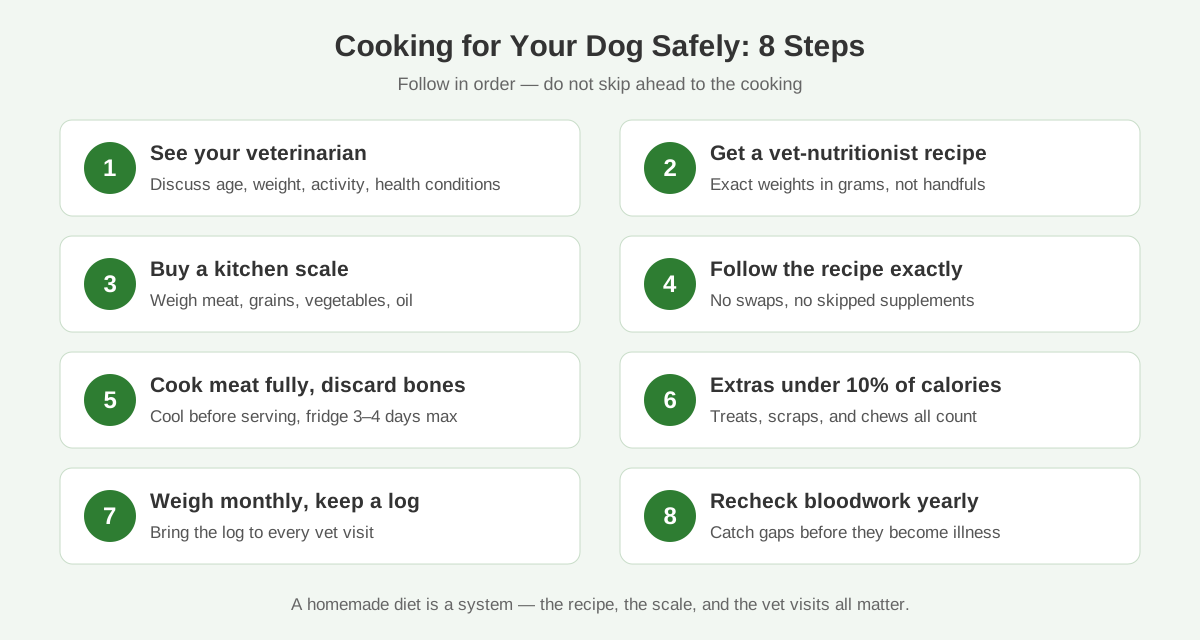
Safe homemade feeding is a system, not a single recipe. Follow these steps in order.
- Start with your veterinarian. Book a nutrition discussion before you change anything. Bring your dog’s age, weight, activity level, and any health conditions.
- Get a recipe from a board-certified veterinary nutritionist. Ask your vet for a referral to a Diplomate of the American College of Veterinary Nutrition, and insist on exact weights in grams, not “a handful” or “a cup.”
- Buy a kitchen scale. Eyeballing portions is the fastest way to unbalance a recipe. Weigh the meat, the grains, the vegetables, and the oil every time.
- Follow the recipe exactly, including supplements. Do not swap ingredients, skip the supplement, or “improve” the recipe with extra vegetables. Every substitution changes the nutrient balance.
- Cook meat thoroughly and discard all bones. Use a food thermometer if you are unsure. Cool the food before serving, and store leftovers in the fridge for no more than three to four days.
- Keep treats and extras under 10 percent of daily calories. Cornell recommends the 10 percent rule: no more than 10 percent of your dog’s diet should be extras. For training rewards, our guide to the best puppy training treats lists low-calorie options that fit inside that budget.
- Weigh your dog monthly and keep a feeding log. Note the recipe, portions, and any new foods or supplements, and bring the log to vet visits.
- Recheck bloodwork once or twice a year. Ask your vet whether a basic blood panel makes sense for a home-fed dog — it catches calcium, iron, and thyroid issues early.
Safe add-ins exist for owners who feed a complete commercial diet. Plain cooked carrots, green beans, blueberries, and small pieces of banana are generally safe in small amounts — and can dogs eat bananas covers portions and preparation in detail. Keep extras inside the 10 percent rule.
How do you know if a homemade diet is working?
A good diet shows up in everyday signs. Your dog should hold a steady weight with ribs you can feel under a light covering of fat and a visible waist. The coat should be shiny, stools firm and regular, and energy steady through the day.
Warning signs are worth a prompt vet call. Unexplained weight loss, a dull or thinning coat, persistent soft stools, vomiting, limping in a growing puppy, or unusual tiredness can all point to a diet problem — but they can also point to unrelated illness, so this article cannot diagnose your dog. Only your vet, with an exam and bloodwork, can tell the difference.
Puppies deserve extra vigilance. A puppy on an unbalanced homemade diet can develop skeletal problems in a matter of weeks, and some of that damage does not fully reverse. If you are cooking for a puppy, the recipe should come from a veterinary nutritionist, with weigh-ins on your vet’s schedule.
What should you do if your dog eats something toxic?
Speed matters, and the right first step is a phone call, not an internet search. If your dog eats onion, garlic, grapes, xylitol, chocolate, or any food from the never-feed table, call your veterinarian or the ASPCA Animal Poison Control Center at (888) 426-4435 right away. Note what your dog ate, how much, and when.
Do not induce vomiting unless a vet or poison control tells you to. Vomiting is dangerous with some substances and useless with others. Keep the packaging if the food came from a packet, especially for xylitol products. If your dog is already showing symptoms — vomiting, wobbling, seizures, collapse, or trouble breathing — treat it as an emergency and go to the nearest veterinary emergency clinic immediately.
Frequently asked questions
Is homemade dog food bad for dogs?
No — homemade dog food is not automatically bad, but most recipes are nutritionally incomplete, so a homemade diet is only safe when a board-certified veterinary nutritionist formulates the recipe and you follow it exactly.
What is the biggest mistake in homemade dog food?
The biggest mistake is cooking without a balanced recipe and supplements, because meat, rice, and vegetables look complete but usually lack calcium, zinc, vitamin D, and omega-3 fatty acids.
Can dogs eat onion or garlic in homemade food?
No — dogs should never eat onion, garlic, or chives, because these foods damage red blood cells and can cause anemia, and the damage builds up over days.
Do I need supplements if I cook for my dog?
Yes — supplements are part of a balanced homemade recipe, not an optional extra, because home cooking cannot supply enough calcium, vitamin D, and other micronutrients from food alone.
Can I feed my dog raw meat instead of cooking it?
Veterinarians advise against raw meat because the WSAVA found no evidence of health benefits over balanced cooked diets, while raw meat can carry Salmonella, E. coli, and Listeria.
How much homemade food should I feed my dog per day?
The amount depends on your dog’s weight, age, and activity level, so use the exact portion in your veterinary nutritionist’s recipe and weigh the food on a kitchen scale.