
Walnut shell cat litter is litter made from crushed walnut shells, a byproduct of walnut processing. It controls odor well, produces little dust, and breaks down naturally, but it clumps more loosely than clay litter and costs more per pound. It suits most adult cats, yet it is not the best choice for kittens or cats with nut allergies.
If you have ever stood in the litter aisle wondering whether the brown, grainy bag labeled “walnut” is a gimmick or a genuine upgrade, you are not alone. Walnut shell litter has moved from a niche eco product into the mainstream litter aisle. This guide explains what it actually is, how it performs against clay and corn litter, and who should try it.
What is walnut shell cat litter?
Walnut shell cat litter is made from ground walnut shells left over after walnuts are harvested for food. The shells are cleaned, crushed into small granules, and sometimes baked to reduce moisture. Nothing else is strictly required: the shell itself is the litter.
Walnut shells are hard, absorbent, and naturally fibrous. Ground into granules roughly the size of coarse sand, they soak up urine, trap odor in their porous structure, and feel familiar under a cat’s paws. Most walnut litters are unscented, and many are marketed as biodegradable — though flushing advice varies by brand and local rules, so check the bag before you flush anything.
The best-known walnut litter in the United States is Naturally Fresh, made by Blue Buffalo. As of November 2026 walnut shell litter is stocked by most major US pet retailers, in stores and online.
One honest note before we compare: we compared specs, prices, and verified owner reviews for this guide. We did not run hands-on lab tests, so the performance notes below reflect published product information and what owners consistently report, not measurements from our own testing.
How does walnut shell litter compare to clay and corn litter?
The fairest way to judge any litter is side by side with the alternatives you already know. The table below compares walnut shell litter with the two most common options: traditional clay litter and corn-based litter.
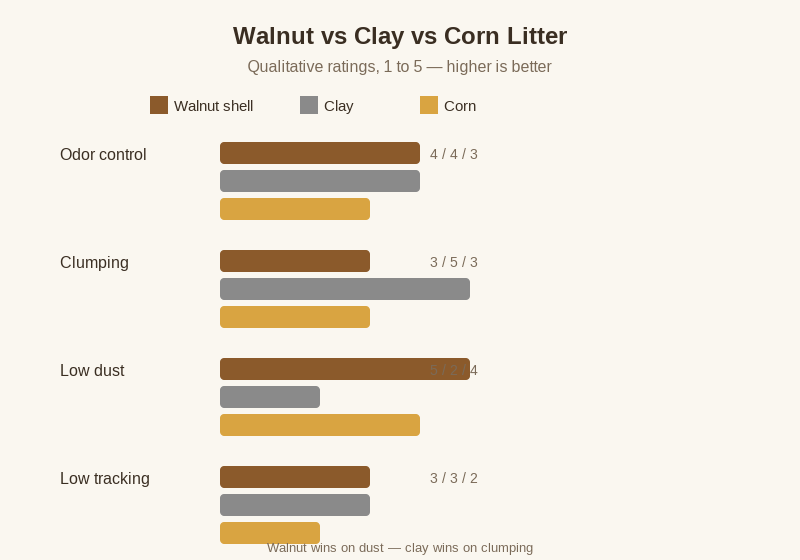
| Feature | Walnut shell litter | Clay litter (clumping) | Corn litter |
|---|---|---|---|
| Main ingredient | Crushed walnut shells | Sodium bentonite clay | Ground corn kernels |
| Clumping | Moderate — soft, crumbly clumps | Strong — hard, firm clumps | Moderate — soft clumps, can stick |
| Odor control | Good — shells absorb odor naturally | Good — depends on added fragrance or carbon | Good when fresh, weaker with age |
| Dust level | Low — granules are heavy and dense | Moderate to high — fine clay dust when pouring | Low to moderate |
| Tracking | Moderate — granules scatter but are easy to see | Moderate — fine grains spread | Moderate — light kernels travel |
| Weight per bag | Lighter than clay, heavier than corn | Heaviest option | Lightest option |
| Biodegradable | Yes — plant-based shells break down | No — mined clay does not break down | Yes — plant-based |
| Typical price | Mid-range, higher than clay per pound | Lowest per pound | Mid-range |
| Allergy note | Avoid if anyone in the home has a tree-nut allergy | No nut ingredients | Avoid if a cat or person has a corn allergy |
Walnut shell litter’s strongest suit is balance. It does not clump as firmly as clay, but it beats clay on dust and weight, and it holds odor longer than corn in a box scooped daily. The tradeoff that matters most is clumping: walnut clumps are softer and break apart more easily, so scooping takes a little more care and you may go through litter faster than with hard-clumping clay.
Price is the other real tradeoff. As of November 2026, walnut shell litter generally costs more per pound than basic clay litter, though it is usually close to corn litter in price.
How well does walnut shell litter control odor?
Odor control is the main reason most owners switch to walnut shell litter. The shells are naturally porous, so they absorb liquid and trap the compounds that cause urine smell rather than covering them with fragrance. Most walnut litters are unscented, which many cats prefer — cats have a far keener sense of smell than people, and a heavily perfumed box can put a cat off using it.
That said, no litter replaces scooping — how often you clean the box matters more than what is in it. The ASPCA’s litter box guidance stresses that a clean box is the single biggest factor in keeping a cat using it, and most behavior problems start with a box that is not cleaned often enough. For a practical cleaning routine, see our guide on how often to clean the litter box.
Two habits make walnut litter smell its best. First, keep the litter 2 to 3 inches deep, so urine is absorbed before it reaches the bottom of the pan. Second, scoop daily and do a full litter change every one to two weeks. Walnut litter holds up well to this rhythm; left unscooped for days, it smells like any other litter.
Is walnut shell litter dusty?
Walnut shell litter is one of the lowest-dust litters you can buy. The granules are dense and heavy, so pouring a fresh bag produces far less airborne dust than clay litter, which is famous for its gray dust cloud. Owners with allergies, asthma, or a cat with respiratory sensitivity often notice the difference immediately.
Low dust does not mean no dust. Every litter produces some particles when poured or when a cat digs. If dust is your main concern, pour slowly from a low height and keep the box in a ventilated room. A covered box traps whatever dust there is inside, so an open box is usually the better choice for a dust-sensitive household.
How much does walnut shell litter track?
Walnut shell litter tracks moderately. The granules are larger and heavier than clay grains, so they do not drift as far, but a determined digger will still kick them out of the box. The dark brown granules are easy to spot and sweep up.
Tracking is mostly a setup problem, not a litter problem. A litter mat outside the box catches most stray granules, and a high-sided or top-entry box keeps more litter inside. If tracking is your biggest frustration, our roundup of the best non-tracking cat litter compares the options that scatter least.
Is walnut shell cat litter safe for cats and kittens?
Walnut shell litter is generally considered safe for healthy adult cats. The shells are a natural plant material, and most formulas contain no added fragrances, dyes, or chemicals.
There are two important exceptions. First, kittens should not use walnut shell litter. Kittens under about 12 weeks old may eat litter, and any litter can cause stomach upset or a blockage if swallowed in quantity. Vets recommend plain, non-clumping litter for very young kittens until they are reliably using the box without eating the litter. Our guide on how to litter train a kitten covers safe litter choices for the youngest cats.
Second, avoid walnut shell litter if anyone in the household has a tree-nut allergy. Walnut shells are a tree-nut product, and the dust and granules can trigger reactions in allergic people. If a nut allergy is in the family, choose corn, paper, or wood litter instead.
For any cat with breathing problems, a urinary issue, or a habit of eating litter, talk to your veterinarian before switching litter types. The Cornell Feline Health Center’s health information pages are a reliable starting point for understanding litter box behavior and when a change in habits needs a vet visit.
Who should use walnut shell litter — and who should skip it?
Walnut shell litter fits many households, but not everyone. The right choice depends on your cat, your home, and what you value most.
Walnut shell litter is a good choice if you:
- Want low dust because you or your cat has allergies or asthma.
- Prefer an unscented, biodegradable litter and want to avoid mined clay.
- Have an adult cat that uses the box reliably and does not eat litter.
- Do not mind softer clumps and are willing to scoop carefully.
- Want a litter that is lighter to carry than a bag of clay.
Skip walnut shell litter if you:
- Have a kitten under 12 weeks old, or a cat that eats litter.
- Have a tree-nut allergy in the household.
- Need rock-hard clumps for a multi-cat box that gets heavy use.
- Want the cheapest litter per pound — basic clay still wins on price.
- Need a litter you can flush — some walnut litters claim to be flushable, but many plumbers and local rules advise against flushing any litter, so do not assume it is safe for your pipes.
How do you switch to walnut shell litter safely?
Cats are creatures of habit, and a sudden litter change is a common reason a cat starts avoiding the box. Switch gradually over 7 to 10 days.
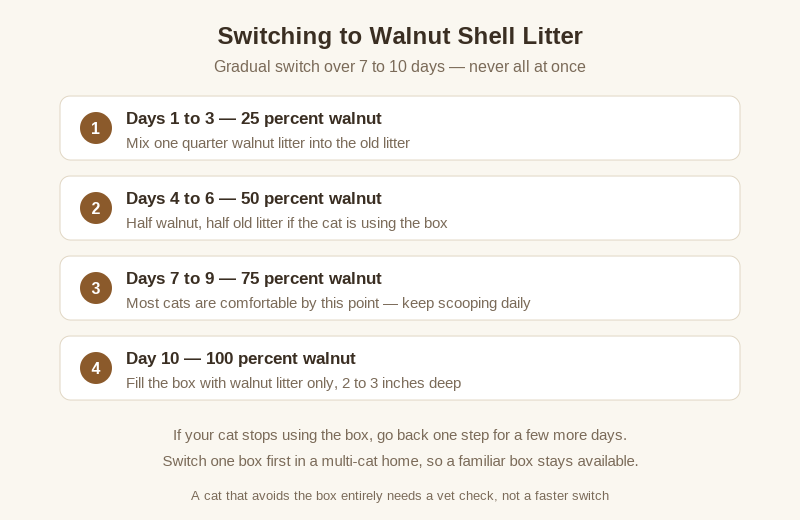
- Days 1–3: mix 25% walnut with 75% old litter. Stir a quarter of walnut litter into the box and watch whether your cat uses it normally.
- Days 4–6: move to a 50/50 mix. If your cat is using the box without hesitation, increase the walnut share to half.
- Days 7–9: move to 75% walnut and 25% old litter. Keep scooping daily so the box stays inviting.
- Day 10: switch to 100% walnut litter. Fill the box with walnut litter only, at the same 2 to 3 inch depth your cat is used to.
If your cat stops using the box at any step, go back to the previous mix for a few more days before trying again. Never force the switch by removing the old litter overnight. If your cat avoids the box entirely, return to the old litter and talk to your veterinarian — a sudden change in litter box habits can be a sign of a medical problem.
One practical tip: run the switch in one box first if you have several. That way your cat always has a familiar box available, and you can see whether walnut litter works before committing every box to it. In a multi-cat home, the one-box-per-cat-plus-one rule still applies — see our guide on how many litter boxes per cat.
How do you dispose of walnut shell litter?
Walnut shell litter is biodegradable, so it breaks down far faster than clay litter. Scooped waste still goes in the trash in most areas — cat waste should not go in a garden compost pile, because it can carry parasites such as Toxoplasma that survive home composting temperatures.
Some walnut litter brands label their product flushable, but flushing cat litter is discouraged by many veterinarians and water authorities, and some local rules ban it outright. Cat feces can carry Toxoplasma gondii, which wastewater treatment does not reliably remove. The safest disposal is simple: scoop solids into a bag, tie it off, and put it in the household trash.
Frequently asked questions
Is walnut shell cat litter safe for cats?
Yes, walnut shell litter is generally safe for healthy adult cats, because it is made from natural, unscented plant material with no added chemicals. The exceptions are kittens under 12 weeks, cats that eat litter, and households with a tree-nut allergy — in those cases, choose a different litter and ask your veterinarian if you are unsure.
Does walnut shell litter clump?
Yes, walnut shell litter clumps, but the clumps are softer and more crumbly than clay litter clumps. Scoop gently and avoid breaking the clumps apart. If firm clumps matter most to you, clay litter still clumps harder.
Can you flush walnut shell cat litter?
Some brands label walnut litter as flushable, but many vets and water authorities advise against flushing any cat litter because cat feces can carry Toxoplasma gondii, which wastewater treatment does not reliably remove. Bag it and put it in the trash instead.
Is walnut shell litter good for kittens?
No, walnut shell litter is not recommended for kittens under about 12 weeks old, because young kittens may eat litter while learning to use the box. Use plain, non-clumping litter for very young kittens, and switch once the kitten is older and no longer mouthing the litter.
The bottom line
Walnut shell litter is a solid middle-ground choice: low dust, good odor control, biodegradable, and gentle on cats that dislike scented litter. Its real weaknesses are softer clumps and a higher price than clay. It suits most adult cats in a home without nut allergies, and it is worth trying if dust or fragrance is your main complaint. Switch gradually over a week and keep scooping daily — the best litter is the one your cat will actually use.