
A cat sleeping in the litter box is usually seeking comfort, safety, or warmth — kittens and newly adopted cats do it most often, and it is harmless for a day or two. It becomes a warning sign when it lasts longer, or comes with straining, crying, or changes in eating or bathroom habits. In that case, call your vet promptly.
Finding your cat asleep in the litter box is unsettling — cats are famously clean animals, so choosing the one dirty spot in the house as a bed feels wrong. But the box is small, enclosed, and saturated with your cat’s own scent, and to a stressed, young, or unwell cat, that reads as security, not filth. The trick is knowing which one you are looking at: a cat that needs a cozier bed, or a cat that needs a vet.
Why do cats sleep in the litter box at all?
A litter box checks nearly every box on a cat’s list of safe sleeping spots: it feels like a den, it holds your cat’s own scent, and it is a place no one else in the house bothers them.
Cats also choose sleeping spots for warmth: fresh litter holds body heat, and a deep bed of soft litter feels surprisingly comfortable. Kittens treat the box like a nest — it is often the first enclosed, warm spot they find in a new home.
Territory matters too: in a multi-cat household, a cat may lie in the box to guard it or hide from a more confident cat. The ASPCA notes that one cat may control access to boxes and prevent other cats from using them freely (ASPCA litter box problems). Even a harmless habit is worth redirecting — lying in urine and feces can cause skin irritation or infection.
When is sleeping in the litter box normal?
Most of the time, box-sleeping is a short-lived phase with a benign cause:
Your cat is a kitten. Kittens sleep in litter boxes more than any other age group. A new kitten has just left its mother and littermates, and the box smells familiar and feels enclosed. If your kitten is eating, drinking, and playing normally, this usually fades within a week or two — see our guide on how to litter train a kitten.
Your cat just moved in. A newly adopted cat, or one whose home has suddenly changed — a new baby, a new pet, a renovation — looks for the safest spot it knows, and the box already smells like the cat itself. Box-sleeping that starts after a move and fades within a few days is a stress response, not a health problem.
Your cat needs a hiding spot. If your home has no covered bed, high shelf, or quiet corner where your cat can retreat, the litter box becomes the bunker — common in busy households with children, dogs, or visitors.
Your cat is cold. A box full of fresh litter holds heat well, so a cat that sleeps in it mainly on cold nights may just be chasing warmth — a heated bed or a sunny windowsill usually wins.
Your cat is guarding the box. In multi-cat homes, a cat may sleep in the box to keep another cat away. The fix is more boxes — one per cat, plus one extra, in separate quiet spots. Our guide on how many litter boxes per cat explains the setup.
The common thread is timing: the behavior is new, short-lived, and your cat otherwise acts like itself.
Is my cat’s litter box sleeping normal or a warning sign?
Here is the comparison in one place. If your cat matches the left column, a few small changes at home usually solve it. If it matches anything in the right column, call your vet.
| Sign | Usually normal | Warning sign — call your vet |
|---|---|---|
| How long it lasts | A day or two, then fades | More than a few days, or keeps coming back |
| Your cat’s age | Kitten, or newly adopted cat | Senior cat, or a sudden change in an adult |
| Eating and drinking | Normal appetite and water intake | Eating less, drinking much more, or refusing food |
| Bathroom habits | Normal peeing and pooping | Straining, crying, repeated trips, little urine |
| Energy and mood | Playful and alert between naps | Lethargic, hiding more than usual, or unusually irritable |
| Urine or stool | Nothing unusual | Blood in urine or stool, diarrhea, or constipation |
| Body language | Relaxed, curled up, sleeping soundly | Hunched, tense, licking the genital area often, or painful when touched |
| What triggered it | A move, a new pet, a new baby, cold weather | No obvious trigger, or it started after an illness |
A cat in the left column is telling you something about its environment; a cat in the right column, something about its body.
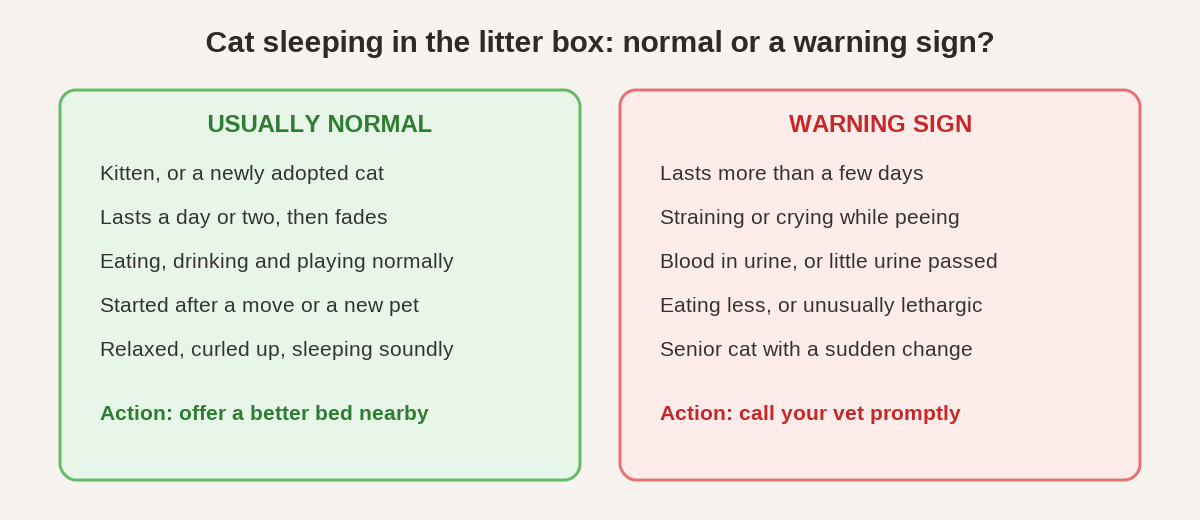
When should you worry about a cat sleeping in the litter box?
Worry when the behavior comes with a change in how your cat pees, poops, eats, drinks, or moves — cats hide pain well, so a change in where they sleep is often the first visible clue that something hurts.
Urinary problems are the most common medical cause. Cats with a urinary tract infection, bladder inflammation, or a blockage may feel a constant urge to urinate and stay in the box because relief never comes. The Cornell Feline Health Center lists difficult or painful urination, increased frequency, crying out while urinating, and blood in the urine among the most common signs of feline lower urinary tract disease (Cornell Feline Health Center on FLUTD). Cornell is blunt about the stakes: a complete urinary blockage can be fatal in less than 24 to 48 hours, so it is an absolute emergency requiring immediate veterinary treatment.
Male cats are at greater risk, because their urethra is longer and narrower. A male cat that strains, goes in and out repeatedly, and produces little or no urine needs an emergency vet visit.
Digestive problems can do the same thing. Diarrhea or constipation can also keep a cat rooted to the box. Loose stools, straining to defecate, or no bowel movement for more than a day all warrant a vet conversation.
Pain and arthritis are a quiet cause, especially in older cats. A cat with sore joints may find it painful to climb in and out of a high-sided box, so once it is inside, it simply stays. If your older cat also hesitates before jumping, arthritis is a likely suspect — and your vet can help with pain management.
Stress-related urinary disease is real, too. Feline idiopathic cystitis — a painful bladder condition with no single identifiable cause — is the most common diagnosis in cats with lower urinary tract signs, according to Cornell, and stress is an important factor.
Sleeping in the box is different from peeing outside it — a cat that has stopped using the box altogether has a different problem, covered in our guide on why cats poop outside the litter box.
What should you do if your cat sleeps in the litter box?
Work through these steps in order — they tell you if it is a habit or a health problem.
- Watch for 24 to 48 hours before changing anything. Note how often your cat sleeps in the box, whether it eats and drinks normally, and what its urine and stool look like. A short log is genuinely useful at the vet.
- Check the basics first. Is the box clean? Is there one box per cat, plus one extra, in a quiet spot with an easy escape route? The ASPCA recommends scooping at least once a day and giving each cat its own box plus one spare (ASPCA litter box problems).
- Rule out a medical problem before you assume it is behavioral. If the box-sleeping lasts more than a few days, or comes with any warning sign from the table — straining, blood, appetite changes, lethargy — book a vet visit. A urinalysis is usually the first step. Do not try to diagnose the cause yourself.
- Do not punish the behavior. Never scold your cat, spray it with water, or drag it out of the box — punishment only adds stress to whatever was already driving it into the box.
- Do not move the litter box. Moving the box while your cat is using it as a refuge removes the one safe place it has found, and can trigger peeing outside the box. Change the surroundings, not the box itself.
If the vet clears your cat medically, it is a comfort or stress habit — the next section covers how to break it gently.
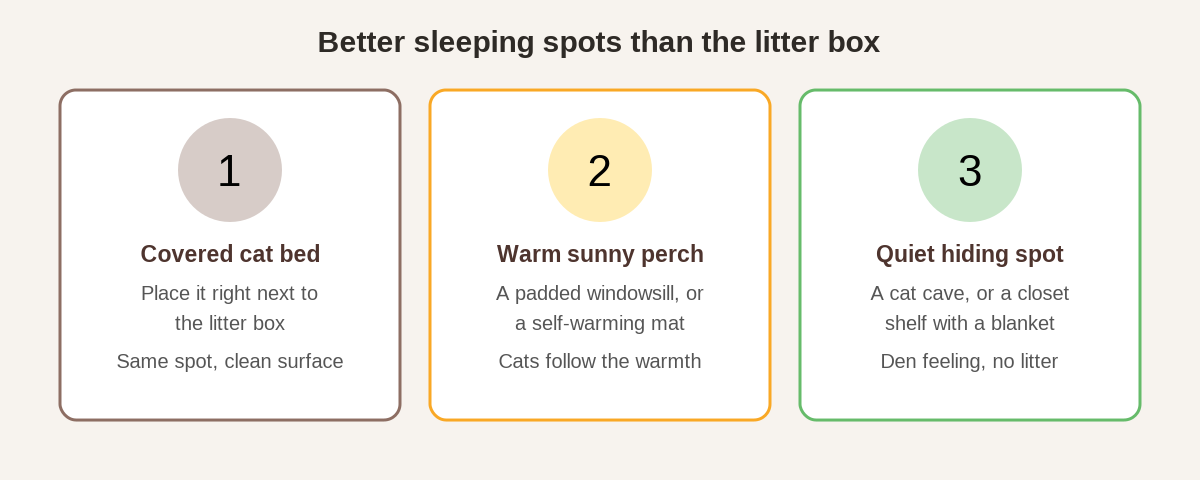
How can you get your cat to sleep somewhere else?
The goal is not to ban the litter box — it is to offer something better. Cats choose sleeping spots by scent, warmth, height, and safety, so beat the box on all four.
Put a better bed right next to the box. Place a soft, covered cat bed — or a cardboard box lined with a worn t-shirt that smells like you — within a few feet of the litter box. The cat gets the same quiet corner and familiar scent, on a clean surface. Many cats switch within a day or two.
Add warmth. If your cat sleeps in the box on cold nights, a self-warming mat or a heat pad inside a cat bed is a strong draw, and a sunny windowsill with a padded perch works the same way during the day. Cats are heat-seekers: give them a warmer spot than the litter, and the litter loses.
Give your cat a real hiding place. A covered bed, a cat cave, or a closet shelf with a blanket gives an anxious cat the enclosed feeling it was getting from the box — without the hygiene problem. Place it in a quiet room, away from foot traffic and dogs.
Make the box less bed-like. Keep the litter shallow — one to two inches is what most cats prefer — and scoop daily. A clean, shallow box is a good toilet and a much less inviting bed. Avoid deep, fluffy litter that doubles as a mattress, and remove any lid that turns the box into a cozy room.
Add an extra box in multi-cat homes. If guarding is the cause, the fix is supply: one box per cat, plus one extra, in separate locations. When no cat has to defend a box, no cat needs to sleep in one — see our guide on how many litter boxes per cat.
Keep the routine calm. Stress-driven box-sleeping fades when the household settles: keep feeding times regular, introduce new pets slowly, and give a nervous cat daily play. Calming pheromone diffusers help some cats, based on owner feedback we compared while researching this article — a low-risk addition, not a cure.
Most cats stop within a week of these changes. If the habit persists past two weeks despite a clean setup, a good bed, and a calm house, go back to your vet.
Frequently asked questions
Is it normal for a kitten to sleep in the litter box?
Yes — kittens sleep in litter boxes more than any other age group, because the box is warm, enclosed, and smells familiar in a new home. It usually fades within a week or two, as long as the kitten is eating and playing normally.
How long is too long for a cat to sleep in the litter box?
More than a few days is too long, and box-sleeping with straining, crying, blood in the urine, or appetite changes should be checked by a vet promptly. A one- or two-day phase after a move is normal; a habit that lasts a week is not.
Can sleeping in the litter box make my cat sick?
Yes — lying in urine and feces can raise the risk of urinary tract infections, skin irritation, and exposure to harmful bacteria, especially if the box is not scooped daily. A clean box reduces the risk, but the habit is still worth redirecting.
Should I move the litter box if my cat sleeps in it?
No — moving the box removes your cat’s only safe spot and can trigger peeing outside the box. Instead, put a comfortable bed right next to the box, keep the box clean and shallow, and add hiding spots elsewhere in the house.
When is sleeping in the litter box an emergency?
It is an emergency if your cat strains to urinate, goes in and out of the box repeatedly, cries while trying to pee, or produces little or no urine — especially in a male cat. A blocked urethra can be fatal in less than 24 to 48 hours, according to Cornell, so call an emergency vet.