
Quick answer: Can dogs eat ham? A tiny piece of plain, cooked ham probably will not hurt a healthy dog, but vets do not recommend feeding it. Ham is very salty and fatty, and glazed, seasoned, or bone-in holiday ham carries extra risks. Skip it and offer a plain dog treat instead.
This guide is for dog owners staring at a holiday ham while their dog stares back. We compared guidance from the American Kennel Club, the ASPCA, and VCA animal hospitals.
Photo: You gonna finish that? by jeffreyw, CC BY 2.0, via Openverse.
Is ham safe for dogs?
Ham is not poisonous to dogs the way chocolate or grapes are, but it is a poor food. The American Kennel Club says feeding ham is not advisable, and adds that a little sliver once in a while probably will not hurt a healthy dog. That is the whole answer: not toxic, not recommended.
The problem is what ham is made of. Curing packs salt into the meat so it keeps, and most store-bought ham also carries sodium-based preservatives. Ham is also fattier than most meats dogs eat.
A healthy adult dog that steals one small bite of plain ham will most likely be fine. The risk grows when ham becomes a regular treat, when a small dog eats a big portion, or when the ham comes with a bone, a glaze, or a garlic rub. If your dog has kidney trouble, heart trouble, or a history of pancreatitis, do not share ham at all.
What should I do if my dog ate ham?
Stay calm. Most cases need watching, not panic.
- Take the ham away. Remove the plate, the bone, and any scraps from reach. Put leftovers in a closed bin or the fridge.
- Work out what your dog ate. Note the type of ham, roughly how much, and whether there was a bone, a glaze, or onion or garlic seasoning.
- Make fresh water available. Salt makes dogs thirsty, so keep a full water bowl nearby.
- Watch for warning signs for the next day. Look for vomiting, diarrhea, heavy drinking, tiredness, belly pain, or loss of appetite. Pancreatitis signs can show up 12 to 72 hours after a fatty meal.
- Call your vet if anything worries you. Call sooner if your dog ate a bone, a sugar-free glaze, a large amount, or ham with onion or garlic. The ASPCA Animal Poison Control Center is open around the clock at (888) 426-4435 (a consultation fee may apply).
- Do not make your dog vomit unless your vet tells you to. Home remedies can do more harm than good.
Why is ham so salty?
Ham is salty by design. Curing means soaking or packing pork in salt so it lasts, and that salt stays in the meat. USDA FoodData Central lists cooked cured ham at about 1,210 mg of sodium per 100 g, more than half of the 2,300 mg daily limit recommended for people.
Dogs are far more sensitive to salt than people are. A few slices can deliver a large salt load for a small dog. The American Kennel Club warns that excess salt can be toxic to dogs, causing vomiting, diarrhea, excessive thirst and urination, and lethargy. In severe cases it can cause kidney damage, seizures, coma, and even death.
The ASPCA Animal Poison Control Center gives the same warning: large amounts of salt can cause sodium ion poisoning, with signs that include vomiting, diarrhea, depression, tremors, seizures, and even death. The nitrates and nitrites used to cure ham are sodium-based, so they add to the load. Country ham is the saltiest of all, and low-sodium ham is still salty for a dog.
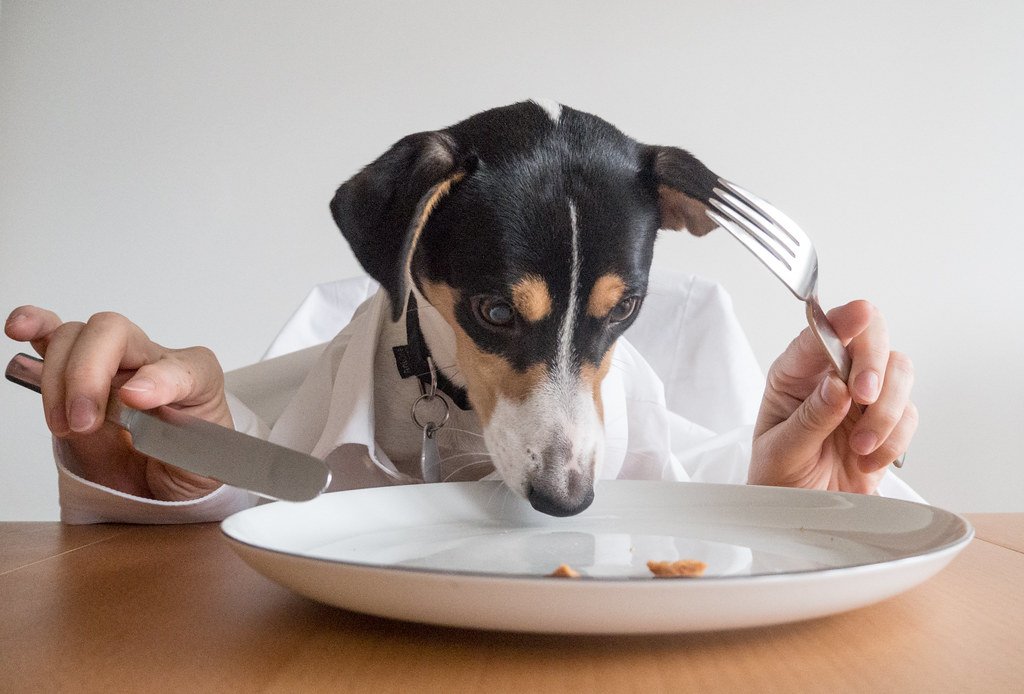
Photo: Dinner for One by Georgie Pauwels, CC BY 2.0, via Openverse.
How does ham fat cause pancreatitis?
Pancreatitis is inflammation of the pancreas, the organ that makes digestive enzymes and insulin. The American Kennel Club explains that too much fat can lead to pancreatitis, and that a healthy amount of animal fat in dog food is about 15 to 20 percent. Ham sits well above that range, especially the fatty edge and trimmings.
A sudden load of fat can overwhelm the pancreas. VCA animal hospitals note that a fatty meal may trigger pancreatitis in some dogs. The signs include vomiting, loss of appetite, belly pain, diarrhea, fever, and tiredness. A dog in pain may also hold a hunched posture.
Some dogs face higher risk: dogs that have had pancreatitis before, overweight dogs, and miniature schnauzers. Treats add up fast, too: VCA notes that treats and toppers should stay under 10 percent of a dog’s daily calories, and a few slices of ham can use up that whole allowance.
Are ham bones, glazes, and seasonings safe for dogs?
No. Each is more dangerous than the meat itself.
Cooked ham bones splinter. Cooking dries a bone out and leaves it brittle, so it can break into sharp pieces. The shards can crack teeth, lodge in the throat, or puncture the gut. Never give your dog a ham bone.
Honey and sugar glazes add sugar on top of salt and fat. Sugar-free glazes are worse: they can contain xylitol, a sweetener that triggers a dangerous insulin release in dogs and can cause liver failure.
Onion and garlic rubs damage red blood cells. The ASPCA warns that onions, garlic, and chives can cause stomach irritation and red blood cell damage, which can lead to anemia. Cooking does not make them safe, and the signs can take days to appear. Gravy and stuffing often carry the same seasoning.
Raisin sauce is toxic. Some hams are served with raisin sauce, and grapes and raisins can cause kidney failure in dogs. Our guide to Christmas foods that are toxic to dogs covers raisins and the other holiday hazards in full.
What not to do
These are the mistakes owners make most often with ham, and each one is easy to avoid.
- Do not feed ham as a regular treat. A daily slice turns a rare risk into a steady diet of salt and fat.
- Do not hand over the fat trimmings. The greasy edge you cut off your own slice is the riskiest part for pancreatitis. Throw it away instead.
- Do not give the bone “to keep the dog busy.” A cooked ham bone is not a chew toy. It can splinter, choke, or block the gut.
- Do not try home remedies for a bone or a big meal. Do not induce vomiting, and do not give oil, bread, or milk to “coat the stomach.” Call your vet instead.
When to call your vet
Call your vet, an emergency clinic, or the ASPCA Animal Poison Control Center at (888) 426-4435 if any of these apply:
- Your dog swallowed a ham bone or a piece of bone, even if your dog seems fine.
- Your dog ate a sugar-free glaze, raisin sauce, or ham seasoned with onion or garlic.
- Your dog ate a large amount of ham, or your dog is small, overweight, or has had pancreatitis before.
- Your dog is vomiting repeatedly, cannot keep water down, or refuses to drink.
- Your dog has belly pain, a hunched posture, diarrhea, fever, or unusual tiredness.
- Your dog shows shaking, weakness, stumbling, or pale gums.
Call right away. Pancreatitis and salt poisoning both get harder to treat the longer they go on. If your clinic is closed, use an emergency vet clinic. Our guide on pet urgent care explains what to bring and what to expect.
We are not veterinarians. This article is general information; talk to your vet about your own pet.
FAQ
Can dogs eat ham at Christmas?
A tiny piece of plain, cooked ham probably will not hurt a healthy dog, but ham is not a good Christmas treat. The salt, fat, glaze, and bone on most holiday hams all add risk. Give your dog a plain dog treat.
Can dogs eat deli ham?
Deli ham is one of the worst kinds to share. It is thin, heavily cured, and loaded with sodium and preservatives. Skip it and offer a small piece of plain cooked chicken or turkey with no skin, bones, or seasoning.
Can dogs eat ham bones?
No, dogs should never eat ham bones. Cooked bones splinter into sharp pieces that can crack teeth, choke a dog, or puncture the gut. Put the bone in a closed bin as soon as the meat is off it.
What is a safe swap for ham at the holiday table?
Plain cooked turkey or chicken breast, with no skin, bones, gravy, or seasoning, is the safest meaty swap. Our guide to can dogs eat turkey explains which parts are safe and which to skip. Small pieces of apple also work, and our guide to can dogs eat apples covers the seeds and core to avoid. For more on feeding dogs safely, see our veterinarian warning about homemade dog food.