
Quick answer: Many Christmas foods that are toxic to dogs are already on the table: chocolate, xylitol in sugar-free sweets, grapes and raisins in mince pies, onions and garlic in stuffing, and macadamia nuts. Even one grape can cause kidney failure, and a single piece of sugar-free gum can poison a small dog. Keep your dog’s plate plain, and call your vet right away if your dog eats any of these.
This guide is for dog owners who want their dog at Christmas dinner without a trip to the emergency vet. We compared guidance from the ASPCA Animal Poison Control Center, the American Kennel Club, and VCA animal hospitals, so every food below comes with what it does and the warning signs.
Photo: Black Dog by Christmas Tree by Helena Lopes, via Pexels.
Why is Christmas the riskiest food week for dogs?
Christmas packs more danger into one week than most of the year. Rich food sits on low tables for hours, guests slip the dog treats, and the trash fills with bones and foil. A quiet moment is all it takes for a dog to reach a plate of mince pies.
The risk is not just the food itself. Holiday dishes hide toxic ingredients inside ordinary-looking recipes. Stuffing carries onions and garlic, fruitcake carries raisins, and sugar-free desserts carry xylitol. For several foods on this list, a small bite is enough to need a vet.
Which Christmas foods are toxic to dogs?
Here are the ten foods to keep away from your dog this Christmas, with what each one does and the signs to watch for.
- Chocolate. Chocolate contains theobromine and caffeine, which overstimulate a dog’s heart and nervous system. Dark chocolate and baking chocolate are the most dangerous, and even small amounts can be fatal. Watch for vomiting, restlessness, a racing heart, tremors, and seizures.
- Xylitol (birch sugar). Xylitol is a sweetener in sugar-free gum, candy, mints, and some baked goods, sometimes listed as birch sugar. In dogs it triggers an insulin release that crashes blood sugar, and it can cause liver failure within days. Watch for vomiting, weakness, and stumbling, sometimes within 30 minutes.
- Grapes and raisins. Grapes and raisins can cause kidney failure in dogs, and the amount that triggers it is unpredictable. Even one grape or raisin can be dangerous, and the fruit hides in mince pies, fruitcake, and Christmas pudding. Watch for vomiting, lethargy, and changes in urination.
- Onions, garlic, and leeks. These damage a dog’s red blood cells and can cause anemia, and cooking does not make them safe. They hide in stuffing, gravy, and soups. Symptoms can take days to show, so watch for weakness, pale gums, and dark urine. Powdered onion and garlic count too.
- Macadamia nuts. Macadamia nuts cause weakness, depression, vomiting, tremors, and a raised temperature in dogs. Signs appear within 12 hours and last 12 to 48 hours. They turn up in cookies and nut bowls.
- Alcohol. Eggnog, rum cake, and mulled wine all carry alcohol, and dogs get drunk on far less than people do. Alcohol can cause vomiting, poor coordination, breathing trouble, tremors, coma, and death. Keep drinks on high tables and never leave a glass on the floor.
- Cooked bones. Cooking makes bones brittle, so turkey, chicken, and ham bones splinter when a dog chews them. The sharp pieces can fracture teeth, choke a dog, or puncture the gut. Put the carcass in a closed outdoor bin as soon as the meat is off it.
- Fatty foods and ham trimmings. Skin, fat, gravy, and rich trimmings can trigger pancreatitis, a painful inflammation of the pancreas that can be life-threatening. Ham is a special problem because it is both salty and fatty. A few pieces of plain turkey with no skin, bones, or gravy are the safe choice; our guide to can dogs eat turkey covers the details.
- Nutmeg. Nutmeg contains myristicin, which can cause high blood pressure, hallucinations, a racing heart, belly pain, and seizures in dogs. A bite of cookie is unlikely to do much harm, but a dog that gets into the spice jar is in real danger. The American Kennel Club lists disorientation, dry mouth, vomiting, tremors, and poor coordination as the warning signs.
- Raw yeast dough. Raw dough keeps rising in a warm stomach, causing painful bloat, and the yeast ferments into alcohol. The combination can be life-threatening. Keep rising dough out of reach. Cooked bread is fine in small amounts.
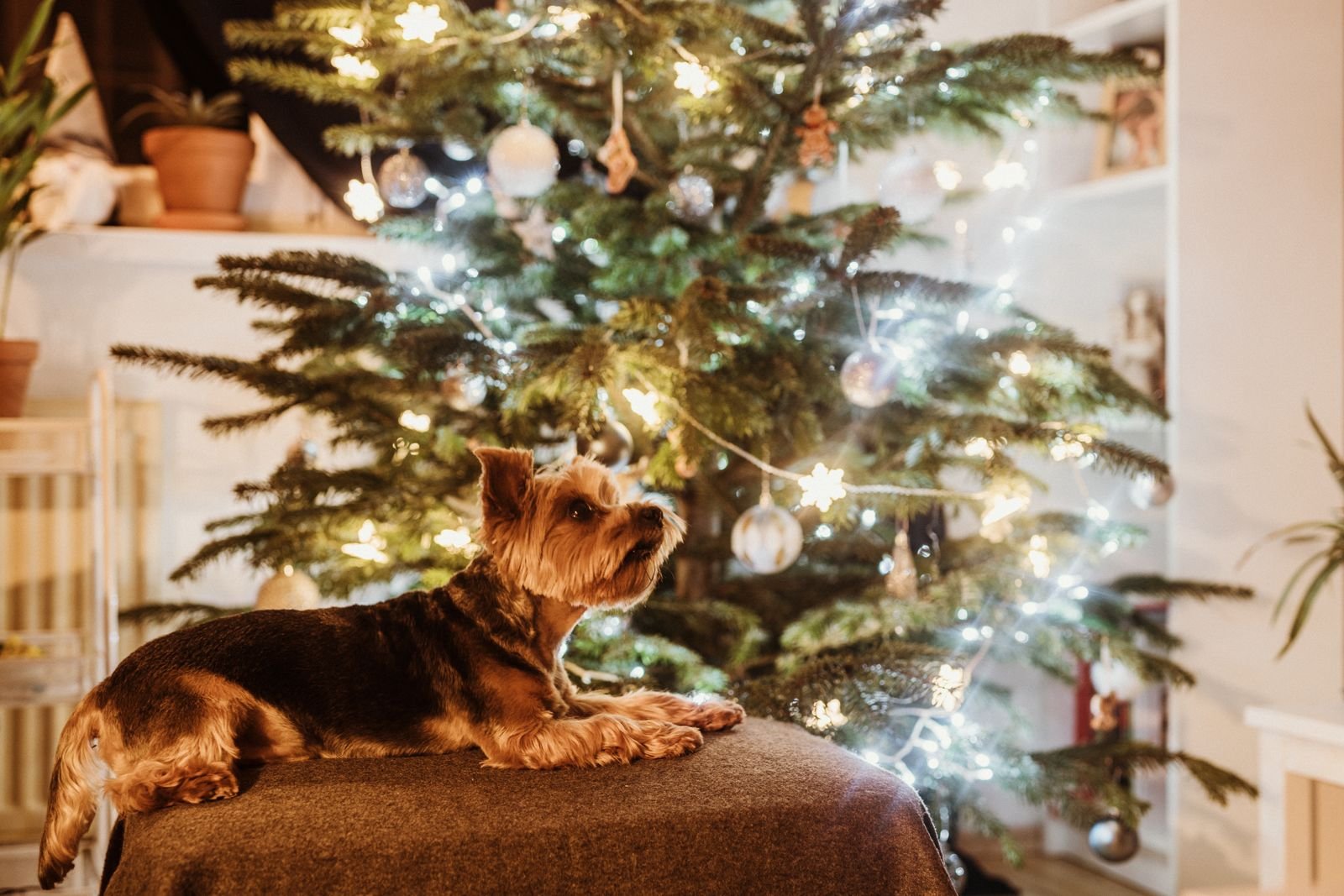
Photo: Brown and Black Dog Sitting on Brown Chair by Helena Jankovičová Kováčová, via Pexels.
What can dogs eat at Christmas instead?
Your dog does not need to miss out. A small plate of plain food in their own bowl keeps them part of the meal.
- A few small pieces of plain turkey meat, with no skin, no bones, and no gravy.
- A spoonful of plain cooked pumpkin, not pumpkin pie filling.
- Plain cooked sweet potato, green beans, or carrots, with no butter or seasoning.
- A few apple slices with the seeds and core removed. Our guide to can dogs eat apples explains which parts are safe.
- A few blueberries or banana slices as a sweet treat. See can dogs eat bananas for the right portion size.
Keep all treats, safe ones included, under 10% of your dog’s daily food. That rule comes from VCA animal hospitals, and it is the easiest way to avoid an upset stomach on a day when everyone overeats. If your dog has a health condition, check with your vet before sharing anything.
What not to do at the Christmas table
- Do not feed from your plate. Once begging works, every guest becomes a source of food you cannot check.
- Do not assume a small bite is safe. For grapes, xylitol, and chocolate, a small amount can still be dangerous, and there is no safe dose to test.
- Do not leave plates on low tables. Dogs reach further than you think when the room is busy. Move food to counters and high tables between courses.
- Do not give your dog the carcass or the bone pile. Cooked bones belong in a closed bin outside, not in the dog’s bowl.
- Do not build a homemade Christmas dinner for your dog on the spot. Rich, seasoned, improvised plates are how dogs get sick. Our veterinarian warning on homemade dog food explains why unplanned homemade meals can cause real harm.
- Do not wait for symptoms. If your dog ate grapes, xylitol, chocolate, or raw dough, call for help now.
When to call your vet
Call your vet or an emergency clinic right away if your dog eats any food on this list, even if your dog looks fine. Do not wait for symptoms, and do not try home remedies such as making your dog vomit unless a vet or poison control tells you to.
Call immediately, day or night, if you see any of these red flags: repeated vomiting or diarrhea, weakness or collapse, tremors or seizures, trouble breathing, pale gums, dark urine, a swollen or painful belly, or a dog that cannot stand or walk straight.
Save this number now: the ASPCA Animal Poison Control Center at (888) 426-4435, open 24 hours a day, 365 days a year. A consultation fee may apply. When you call, have the food packaging, your dog’s weight, and the time your dog ate it ready. If your dog swallowed something that is not food, such as tinsel, our guide on what to do when your dog eats acorns covers the same first steps.
FAQ
Can dogs eat Christmas ham?
No, not as a meal. Ham is very salty and fatty, and fatty trimmings can trigger pancreatitis, a painful inflammation of the pancreas. A tiny taste is unlikely to cause an emergency, but plain turkey is a safer swap.
Can dogs eat mince pies?
No. Mince pies are made with raisins and currants, and even one raisin can cause kidney failure. The amount that triggers it is unpredictable, so there is no safe bite size. Keep mince pies, fruitcake, and Christmas pudding out of reach.
What should I do if my dog eats chocolate?
Call your vet or the ASPCA Animal Poison Control Center at (888) 426-4435 right away, and tell them the type, the amount, and your dog’s weight. Dark and baking chocolate are the most dangerous. Do not wait for symptoms.
Can dogs eat Christmas turkey?
Yes, in small amounts, if it is plain. A few pieces of turkey meat with no skin, bones, or gravy are safe for most dogs. Skip the skin, fat, stuffing, and gravy, because those are the parts that cause trouble. Our full guide to can dogs eat turkey covers portions.
We are not veterinarians. This article is general information; talk to your vet about your own pet.
Before you share any Christmas food, check it in seconds with our Can My Dog Eat This?